
Last updated November 15, 2026
 Metal roofing
 Architectural shingles
 Tile roofing
 GAF
 Owens Corning
 Flat & low-slope
Free roof inspection with deck photos before we talk money - GAF and Owens Corning certified installation
Roofing Warning Signs: A Pompano Beach Homeowner’s Reference Guide
A brown ceiling stain in Pompano Beach is not a roof leak until proven otherwise. It’s just as likely to be a condensation problem from an overworked HVAC system, and a new roof won’t fix it. That’s the uncomfortable truth most warning-sign lists skip: the same visible cue can point to three different problems with three very different repair bills. This guide connects what you see to what’s actually happening underneath, so you can walk into a conversation with a roofer knowing what questions to ask instead of just pointing at a stain. We’ll cover the signs worth watching, the ones that get misread, and the attic clues that show up months before anything appears outside.
Quick Answer
Roof warning signs in Pompano Beach fall into four groups: surface changes (granule loss, blistering, bald spots), shape changes (lifted, cupped, or missing shingles), water intrusion clues (stains, sagging, soft decking), and attic-level signals (daylight, damp wood, rusted fasteners). The key is reading each sign in context – a lifted shingle often means a ventilation problem, not failed material, and an interior stain is frequently condensation rather than a leak. Catching them early is what keeps a repair a repair.
Styles & brands we work with
- Architectural shingles
- Metal roofing
- Tile roofing
- GAF
- Owens Corning
- Flat & low-slope
Table of Contents
- Why the Same Warning Sign Means Different Things Here
- Granule Loss: Normal Weathering or UV Blistering?
- Lifted and Cupped Shingles: Usually a Ventilation Problem
- Flashing Leaks Versus Field Shingle Failure
- Interior Stains: Condensation or a Real Leak?
- The Attic Signs That Show Up First
- What Metal Roof Components Tell You
- Warning Sign Quick Reference
Why the Same Warning Sign Means Different Things Here
Roofs age differently depending on what they’re exposed to. Pompano Beach gets intense, near-constant sun and heavy seasonal rain, and those two forces attack a roof in ways that cold-climate advice doesn’t account for. That matters for diagnosis. A homeowner searching “roof warning signs” usually lands on generic lists built for places with snow and freeze cycles – lists that assume a lifted shingle is a material failure and a ceiling stain is always a leak.
Neither assumption holds reliably here. In our experience, the diagnoses we run into most often in Pompano Beach are:
- Heat and UV damage that ages shingles from the top down, showing as blistering and bald patches before anything tears.
- Ventilation imbalance in attics that cook under the Florida sun, warping shingles from underneath.
- Flashing and penetration failures, where water gets in at a seam or valley rather than through the shingle field itself.
- Condensation from interior humidity and HVAC performance, which mimics a leak on the ceiling.
- Storm damage from wind-lifted shingles and driving rain, which can look identical to aged material until someone gets on the roof.
The point isn’t to make you diagnose this yourself. It’s that knowing which of these is most likely changes what you ask for. A homeowner who says “my shingles are curling, I probably need a new roof” gets a different conversation than one who says “my shingles are curling, can you check the attic ventilation before we talk replacement.” The full process, from inspection through repair and, only when warranted, roof replacement, all runs through one company, so the diagnosis doesn’t get handed around.
Granule Loss: Normal Weathering or UV Blistering?
Every asphalt shingle loses granules over its life – that gritty sand in your gutters is a little bit normal. The question is whether the loss is even, gradual, and tied to age, or patchy, accelerating, and tied to heat damage. South Florida’s UV exposure makes the second kind common, and it’s easy to misread from the ground.
Here’s how to tell them apart without climbing up:
- Look at the pattern. Even granule loss across the whole roof, especially on a roof that’s seen a lot of summers, is weathering. Loss concentrated in patches – often facing the afternoon sun – points to blistering.
- Check the gutters. A steady grit that fills gutters after every rain is normal. Sudden heavy accumulation, or grit with a dark, shiny backup underneath, is a sign the shingle surface is breaking down faster than it should.
- Look for shine. When granules wear off enough that the shingle’s dark asphalt base shows through and reflects light, the shingle is losing its UV protection. That’s when the damage starts compounding.
- Look for raised bubbles. Small blisters on the shingle face are what UV heat damage looks like. They pop, expose the mat, and water gets in.
Granule loss alone rarely means replacement. On a roof that’s otherwise sound, isolated blistering can be repaired at the affected area. What we watch for is whether the blistering is spreading; scattered blisters often mean the whole surface has taken the same UV load. Our technicians have up to 9 years of experience reading exactly this difference, and it’s a big reason we push for an inspection before quoting anything. Inspection is a valid outcome on its own, not a hook for a bigger job.
Lifted and Cupped Shingles: Usually a Ventilation Problem
When shingles lift at the edges or cup upward, the instinct is that the material has failed. Often it hasn’t. In Pompano Beach, lifting and cupping are frequently the visible symptom of an attic that can’t breathe. A hot attic traps moisture and heat against the underside of the deck, and the shingles on top warp in response. Replace the shingles without fixing the airflow and the new roof starts the same pattern.
What an underperforming attic looks like from below:
- Hot, still air when you open the attic access – no noticeable draft.
- Rusted nails and fasteners poking through the deck, a sign moisture has been sitting up there.
- Wavy or darkened decking where heat and damp have worked on the wood.
- Condensation on the underside of the roof deck in the morning, especially in humid months.
The wrong repair here is a partial reroof – pulling off the cupped shingles and nailing on new ones at the affected slope. That addresses the symptom and leaves the cause in the attic. A proper fix looks at intake and exhaust ventilation together, because an attic with good exhaust but blocked intake still can’t move air. If the decking underneath has started to soften or rot, that section gets replaced as part of the job, not papered over.
This is where a repair-first approach earns its keep. We repair first – replacement is only recommended when it’s genuinely the right answer, and a ventilation-driven cupping problem usually isn’t. It’s a repair plus an airflow correction.
Flashing Leaks Versus Field Shingle Failure
This is the most misdiagnosed split in residential roofing, and it’s the one that leads homeowners to replace a whole roof they didn’t need. Flashing is the metal (or sometimes membrane) that seals the edges and penetrations – around chimneys, where a roof meets a wall, in valleys, around vents. A leak at flashing is a localized problem. A leak through the shingle field is a surface problem. They need different fixes, and one is much less expensive than the other.
Signs that point to flashing:
- Water showing up at one specific spot near a wall, chimney, or roof-to-wall junction – not across a wide area.
- A stain that shows up on a wall below an upper roofline rather than on the ceiling.
- Active drips during rain that stop cleanly when the rain stops.
- Visible gaps, lifted metal, or cracked sealant at a seam or penetration.
Signs that point to the shingle field:
- Water showing up across a broad area of ceiling, often far from any penetration.
- Multiple small stains in a cluster, suggesting widespread water entry.
- Stains that appear in a pattern tracking the slope of the roof.
Flashing repairs are typically spot work: resealing, resetting, or replacing the flashing itself. Field failures may call for a partial or full surface repair. Getting this split right is the difference between a targeted fix and a much larger project. When you call roof repair help, the first thing worth asking is whether the technician will separate flashing from field diagnosis – that tells you they’re actually going to look rather than quote from the driveway.
Interior Stains: Condensation or a Real Leak?
A brown ceiling stain is the sign most homeowners notice first. It’s also the one most often misattributed. In a Pompano Beach home, an interior stain can come from four places, and only one of them is a roof leak:
- Condensation from interior humidity. Running a house tight and cool in high humidity pushes moisture up against the attic side of the ceiling. Replacing the roof would change nothing.
- HVAC condensate problems. A clogged or slow drain line on an air handler can soak a ceiling without any roof involvement.
- Plumbing. Supply or drain lines in the attic space, or an overflow from a fixture above.
- An actual roof leak. Water getting in at flashing, a penetration, or the shingle field.
How to narrow it down before you call anyone:
- Timing. Stains that darken during or right after rain point to a leak. Stains that grow slowly on hot, humid days point to condensation.
- Location. A stain directly below a vent, air handler, or plumbing line is often not the roof. A stain below a plain stretch of ceiling with no interior equipment above is more likely roof-related.
- Spread. A ring that grows outward over days suggests a slow, steady source. A stain that resets itself dry between rains suggests a weather-coupled leak.
This is where a flashlight inspection of the attic earns its place before anyone gets on the roof. If a technician quotes a roof repair from the driveway without checking the attic, that’s worth questioning. Our inspection service is designed as the honest diagnostic step, so you know which of the four causes you’re dealing with before any money changes hands.
The Attic Signs That Show Up First
Visible exterior damage is the last stage of most roof problems, not the first. The attic usually shows the warning six to eighteen months earlier – long before a stain reaches the ceiling. If you own a home in Pompano Beach, a flashlight and a few minutes in the attic will tell you more than a ladder to the roof ever will.
Here’s what to look for, in order of how telling each sign is:
- Daylight through the roof deck. Any visible light means there’s a gap. It’s a direct, unambiguous warning.
- Rusted nails and fasteners. Moisture has been sitting in the attic long enough to rust metal, even if the decking looks fine from inside.
- Dark streaks or staining on rafters and decking. Water that’s run or seeped along the wood leaves a telltale mark.
- Soft, spongy, or crumbly decking. Press gently with a screwdriver handle. Wood that dents is wood that’s taken on water.
- Condensation on the underside of the deck in the morning. Points to ventilation or interior humidity issues, not necessarily a leak.
- Visible mold or a musty smell. Suggests a moisture problem that needs resolving whether or not the roof is the source.
- Sagging decking between rafters, or wavy sheathing visible from outside. A structural warning that warrants prompt inspection.
Seeing any one of these doesn’t mean the roof needs replacing. It means the roof has something worth understanding. What matters is the combination – rust plus daylight plus soft decking is a different situation than morning condensation alone. Getting the picture early is what keeps repair on the table. For homeowners across Pompano Beach, that early check is often the difference between a small fix and a much larger one down the road.
What Metal Roof Components Tell You
Metal roofs, flashing, and fasteners age differently from shingles. On a metal roof or a metal flashing system, the surface reacts to heat and humidity in visible ways. That can be reassuring or alarming, depending on what you’re seeing, and the trick is to distinguish routine aging from actual damage.
Signs of normal aging on metal components:
- Chalky, faded paint that’s worn evenly across the surface. That’s the finish doing its job – skin, not structure.
- Dull, mildly discolored panels that still sit flat and fasten tight.
- Minor surface rust at edges or fasteners that hasn’t spread and hasn’t loosened the metal.
Signs of actual damage on metal components:
- Lifted, wavy, or rippled panels that suggest fasteners have backed out or the metal has moved.
- Rust that’s pitted through or spreading from a fastener head into the panel – that’s metal with a real weakness.
- Dented or creased panels from impact or wind-driven debris.
- Loose fasteners or gasket failure at screws, which is a common spot for water entry.
- Drip marks or corrosion streaks below a seam or fastener head, suggesting an active leak.
That rust-versus-damage distinction matters for two reasons. First, it changes the repair: routine aging needs maintenance; genuine damage needs repair. Second, the difference between routine aging and storm-related physical damage can matter to your insurer, and it’s worth documenting before you file a claim. Our roof inspection can produce the honest assessment of what’s wear versus what’s damage, and our technicians have up to 9 years of experience differentiating the two.
Warning Sign Quick Reference
Here’s the reference to keep on your phone. Match what you’re seeing to the most likely cause, then to what it usually means for repair scope.
- Even granule loss across the whole roof – normal weathering as the shingles age. Repair only at failing sections; replacement is a longer view.
- Patches of granule loss under direct sun, with visible blisters – UV heat damage (blistering). Local repair is possible if the damage is contained; spreading blisters mean the whole surface has taken the load.
- Lifted or cupped shingles, often across multiple slopes – ventilation or heat issue. Repair plus airflow correction; replacement of the shingles alone won’t hold.
- Water at one spot near a wall, chimney, or roof-to-wall junction – flashing leak. Spot repair.
- Water across a broad ceiling area, far from any penetration – possible shingle field failure. Needs a proper diagnosis.
- Interior stain growing on hot, humid days without rain – condensation or HVAC. Not a roof leak until proven otherwise.
- Interior stain showing up during or right after rain – likely a roof-related leak. Worth a prompt inspection.
- Daylight through the roof deck, rusted nails, soft decking in the attic – moisture intrusion, often months before interior symptoms. Inspect promptly.
- Lifted or dented metal panels, rust spreading from fasteners – metal component damage. Repair and document for any insurance conversation.
Common Mistakes to Avoid
- Quoting a roof replacement from the driveway. Any diagnosis that doesn’t include the attic and a close look at the flashing is incomplete. A contractor who quotes before inspecting is guessing – usually on the high side.
- Assuming a ceiling stain means a roof leak. In Pompano Beach, interior stains frequently trace back to condensation or an HVAC problem. Replacing a roof for an HVAC issue is expensive and fixes nothing.
- Reroofing the visible symptom of a ventilation issue. If lifted or cupped shingles are caused by trapped heat and moisture, new shingles will cup in the same pattern. The attic needs to be part of the fix.
- Treating a flashing leak as a full reroof. A leak at a chimney or roof-to-wall junction is a spot repair most of the time. Confirm the diagnosis before agreeing to surface work.
- Waiting for the leak to be obvious. The attic signs usually show months before the ceiling does. A flashlight inspection costs you nothing and catches problems while they’re still small.
- Skipping the written estimate. A verbal ballpark is not a plan. Ask for a written, line-item estimate that spells out what’s being repaired, what’s being inspected, and what’s not being touched.
- Choosing a brand before choosing the roof. The right shingle or material depends on the diagnosis, not the other way around. Working with brands like GAF, CertainTeed, Owens Corning, and Boral gives us options when replacement is warranted – but only after we know what the roof actually needs.
See the difference
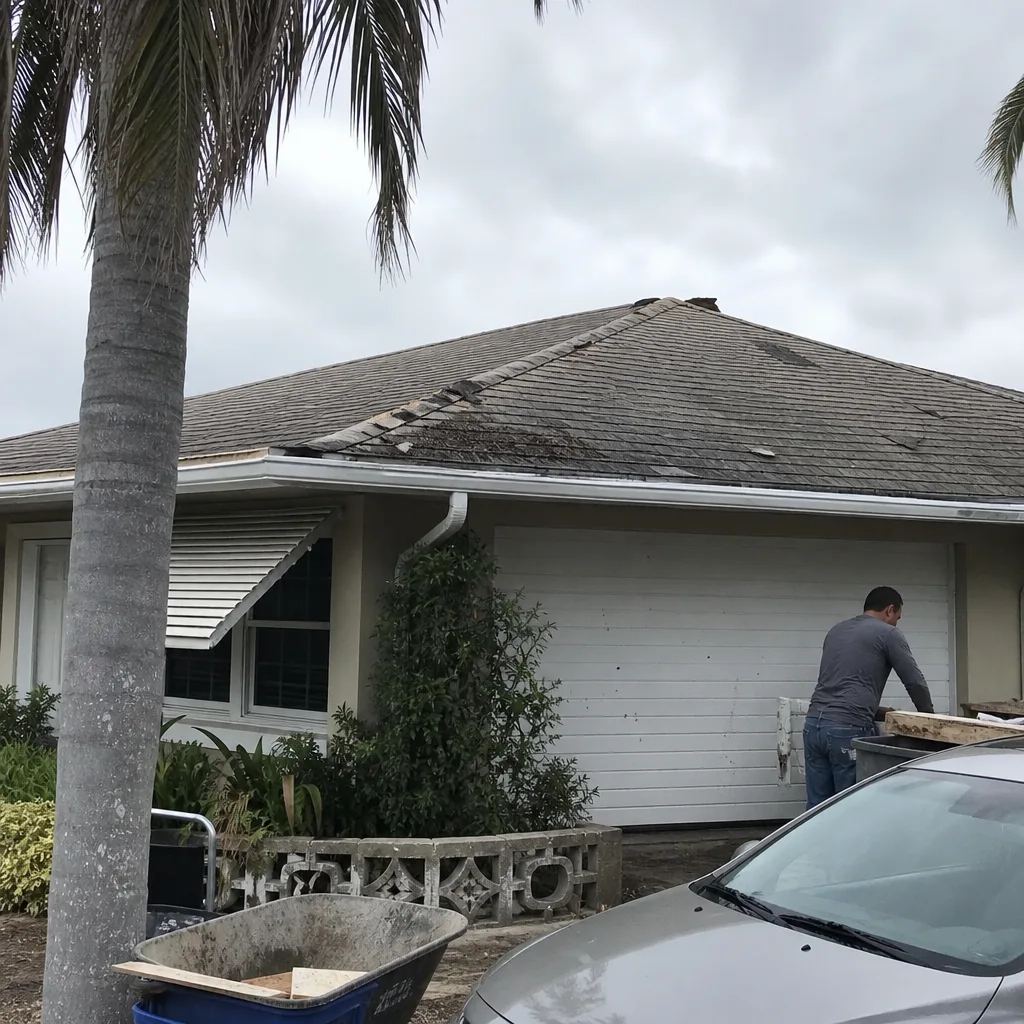 Before
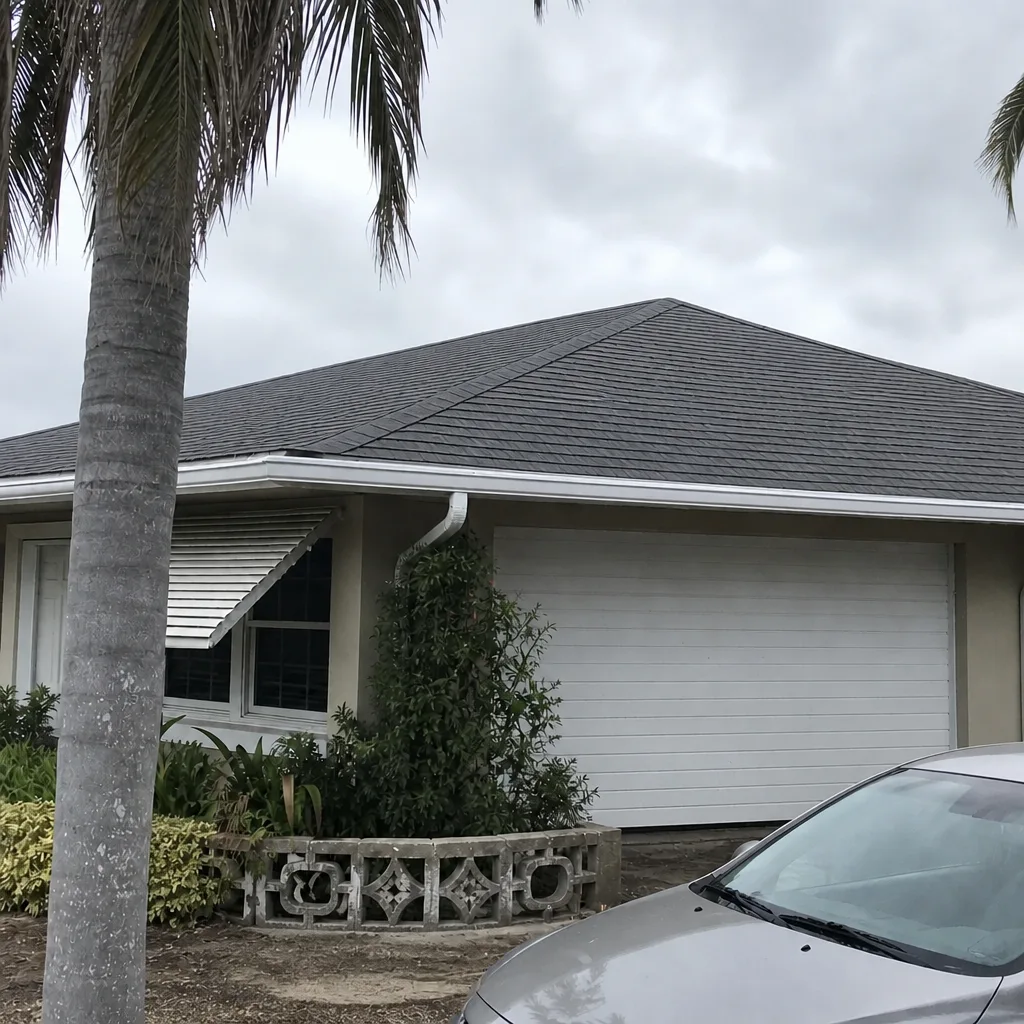 After
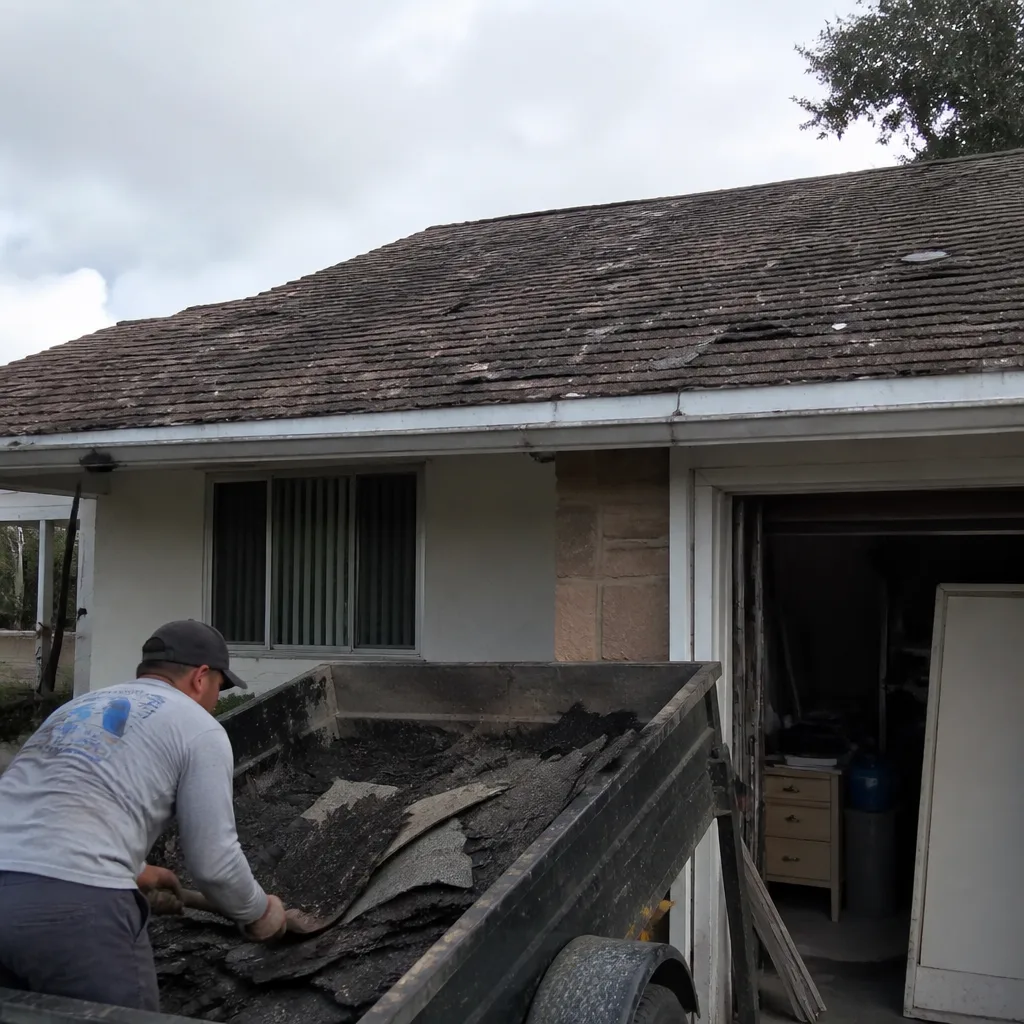 Before
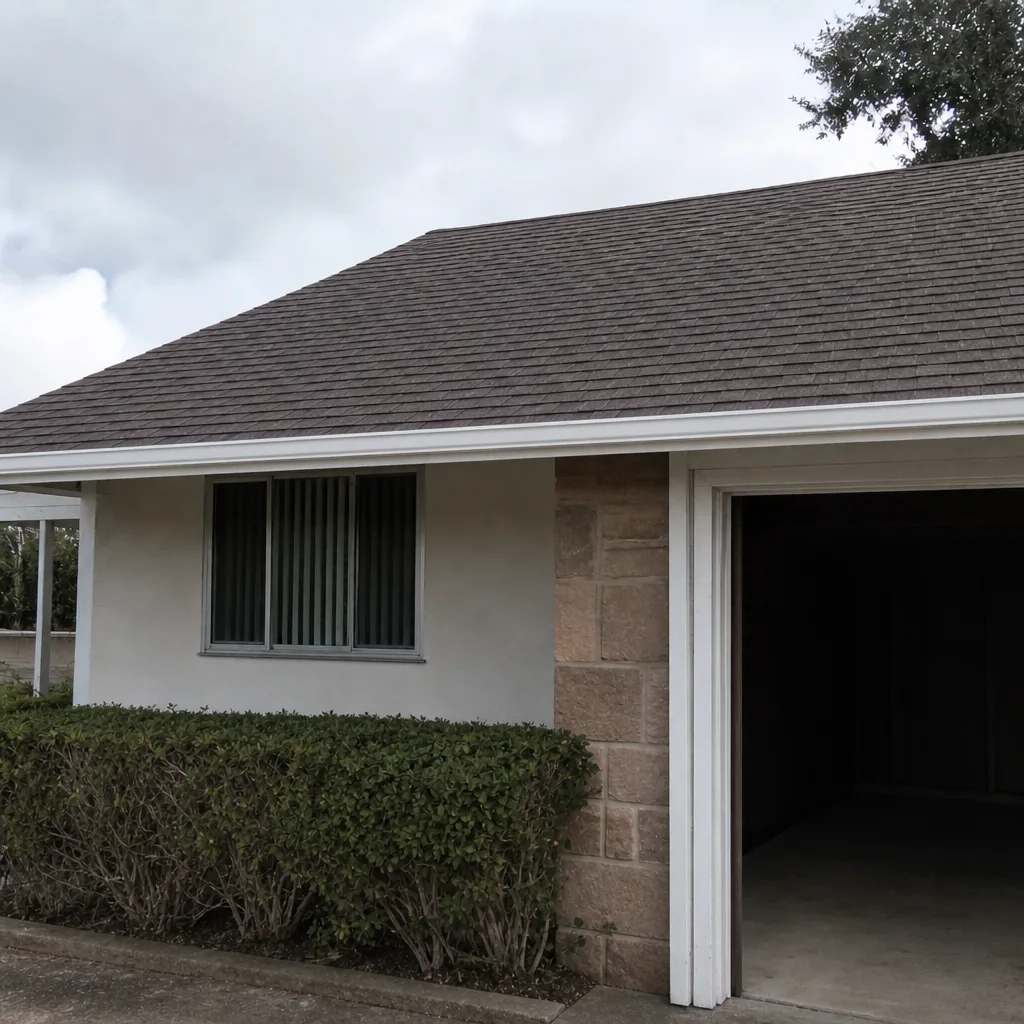 After
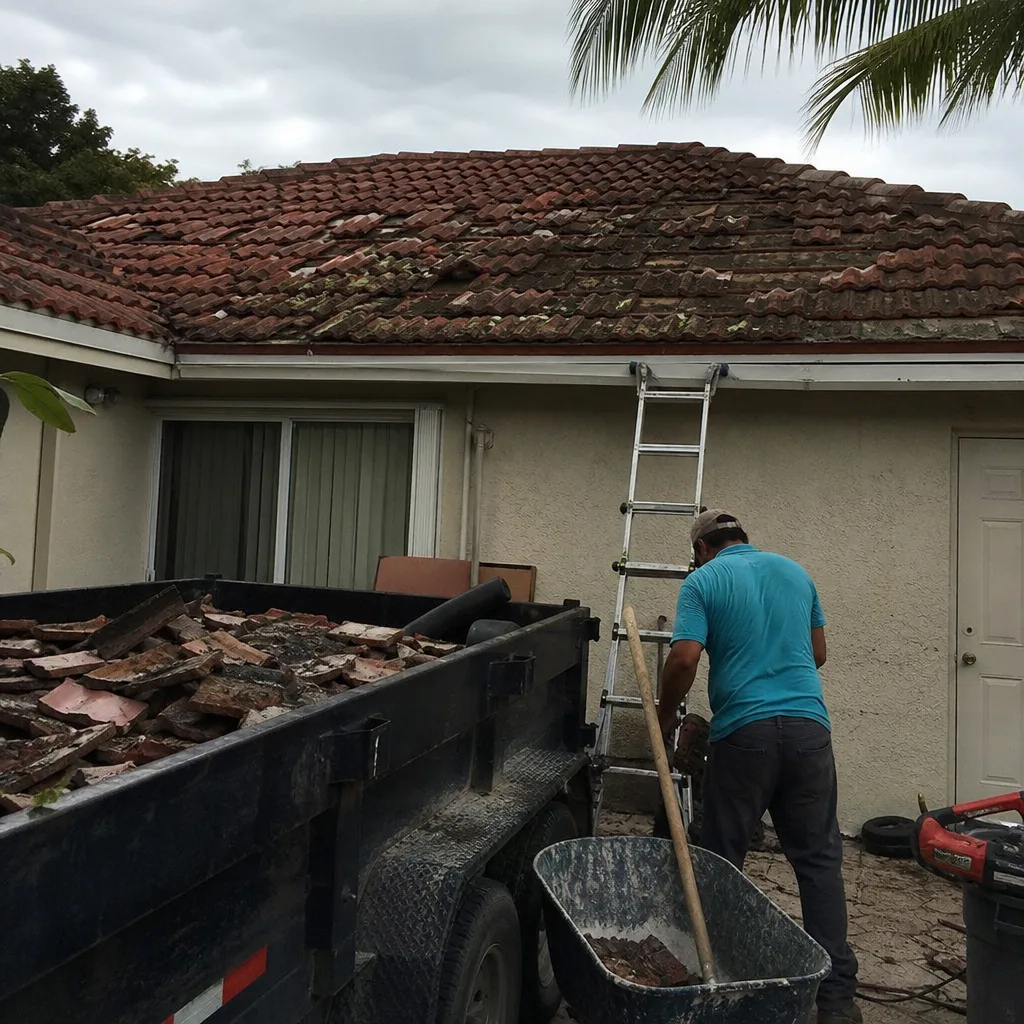 Before
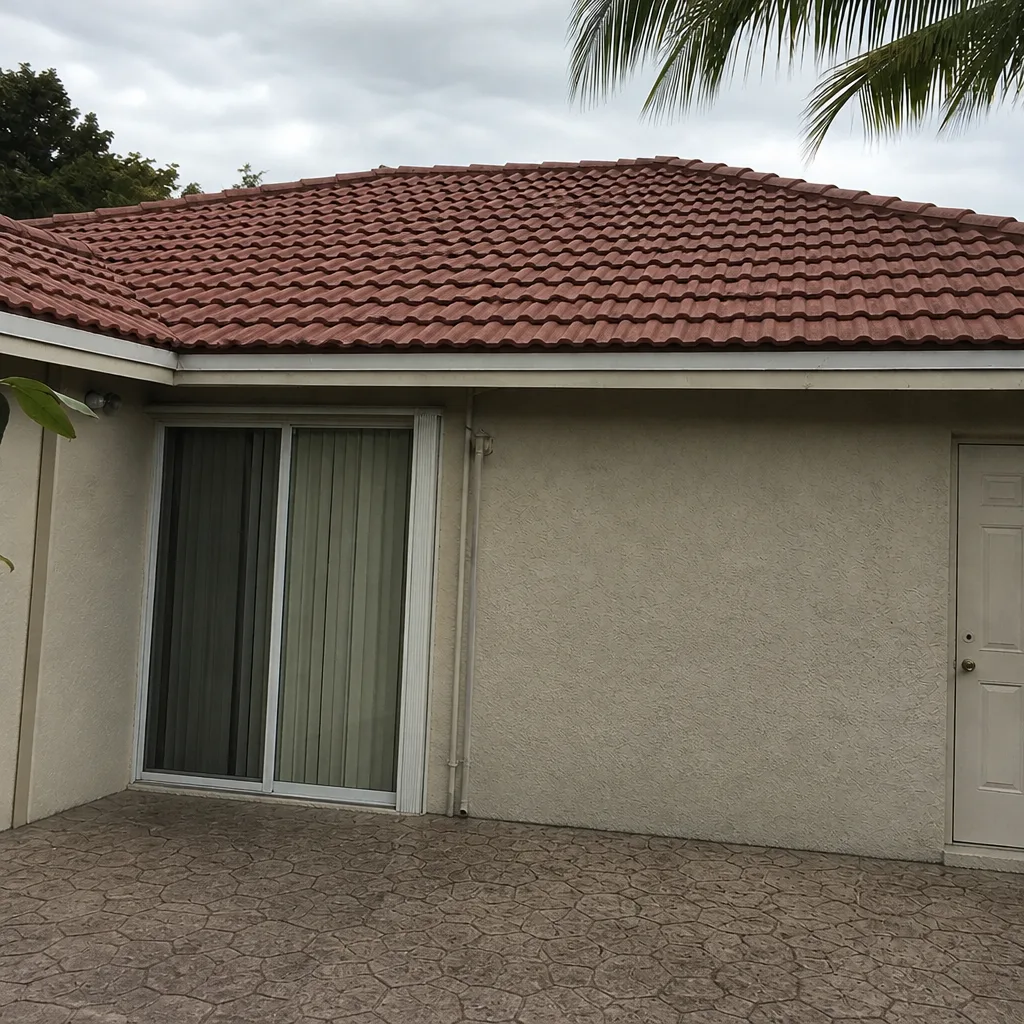 After
When to Call a Professional
Some signs are worth a conversation; some are worth a call today. Call us if you’re seeing any of the following: daylight through the roof deck, water actively dripping during rain, a sagging roofline or wavy sheathing visible from the street, soft or spongy decking in the attic, interior stains that darken with rain, or visible damage to flashing at a chimney, wall junction, or vent. If you’ve had strong wind or a heavy storm recently and any shingles are missing or lifted, that’s worth a look before the next rain. Don’t wait for a ceiling stain to confirm what the attic is already telling you. Rutherford Roof Repair offers free estimates in Pompano Beach – call (888) 361-4813. We answer 24/7, and a call outside dispatch hours is booked into the next opening, Sunday through Friday, 7am to 7pm. Our technicians have up to 9 years of experience, and we bring the same repair-first lens to every inspection: your roof may need less than you think, and we’ll find out before we talk price.
Frequently Asked Questions
The most common are granule loss in the gutters, lifted or cupped shingles, interior ceiling stains, soft or stained decking visible in the attic, and flashings that have pulled away from a wall or chimney. In Pompano Beach specifically, attic-level signs – rusted nails, daylight through the deck, morning condensation – often show up before anything visible on the outside. Call (888) 361-4813 for a free estimate; we’ll look at the attic, the flashing, and the shingle field before recommending anything.
No. A ceiling stain can come from condensation, an HVAC condensate issue, a plumbing line, or an actual roof leak, and only the last one is roof work. The timing is the biggest clue: stains that grow during or right after rain point to a leak, while stains that grow on hot, humid days point to condensation or HVAC. Call (888) 361-4813 to schedule a free inspection, and we’ll trace the source before we quote anything.
Even granule loss across the whole roof is normal aging; patchy loss with visible blisters or shingles worn down to the shiny asphalt base points to UV-related failure. Lifted or cupped shingles, meanwhile, are often a ventilation problem rather than a shingle problem. An inspection separates the three. Call (888) 361-4813 for a free estimate – we repair first, and replacement is only recommended when it’s genuinely the right answer.
Coverage depends on your policy and on whether the damage is storm-related versus wear and tear, which is why documentation matters. A detailed inspection that separates the two gives you the cleanest starting point for any claim. We can work with your insurer on the documentation you’ll need. Call (888) 361-4813 to schedule a free inspection before you file.
Timeline depends on scope: a flashing repair takes less time than a section of shingle replacement, and a ventilation correction plus a surface repair takes longer than either. We set the timeline in the written estimate, before work starts, so there are no surprises. Call (888) 361-4813 to schedule your free estimate – the price and the timeline are set per job.
No – the price is fixed by the written estimate. If we find something unexpected once the decking is exposed, like soft wood under a leak area, we stop and talk with you about the options before doing anything that changes the scope. Our inspection and estimate are the “your roof may need less than you think” step in the conversation, not a sales pitch. Call (888) 361-4813 to schedule your free estimate.
The Bottom Line
The warnings worth watching aren’t the dramatic ones – they’re the boring, early ones: rusted nails in the attic, a shingle worn to a shine, a flashing that’s pulled a quarter-inch away from a wall. Those show up months before a ceiling stain, and they’re the signs that keep a repair a repair. Read them in context. A lifted shingle is usually airflow, an interior stain is often condensation, and a flashing leak is rarely a whole-roof problem. Get an honest diagnosis before anyone talks about replacement. Rutherford Roof Repair handles inspection, repair, and replacement as one process, so the diagnosis holds together from the first attic check to the last shingle. Call (888) 361-4813 for your free estimate. We answer 24/7, with fast dispatch from 7am to 7pm, Sunday through Friday.
Written by the team at Rutherford Roof Repair.