
Last updated November 15, 2026
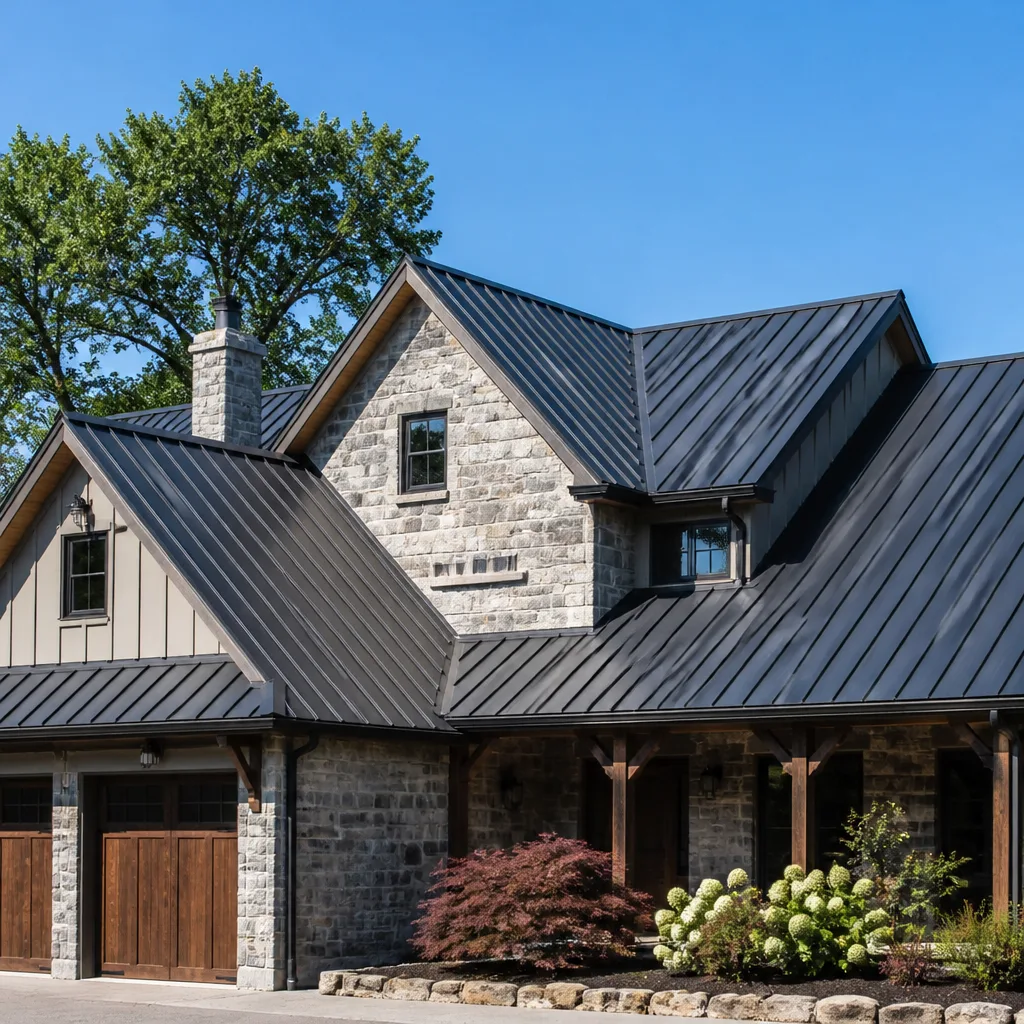 Metal roofing
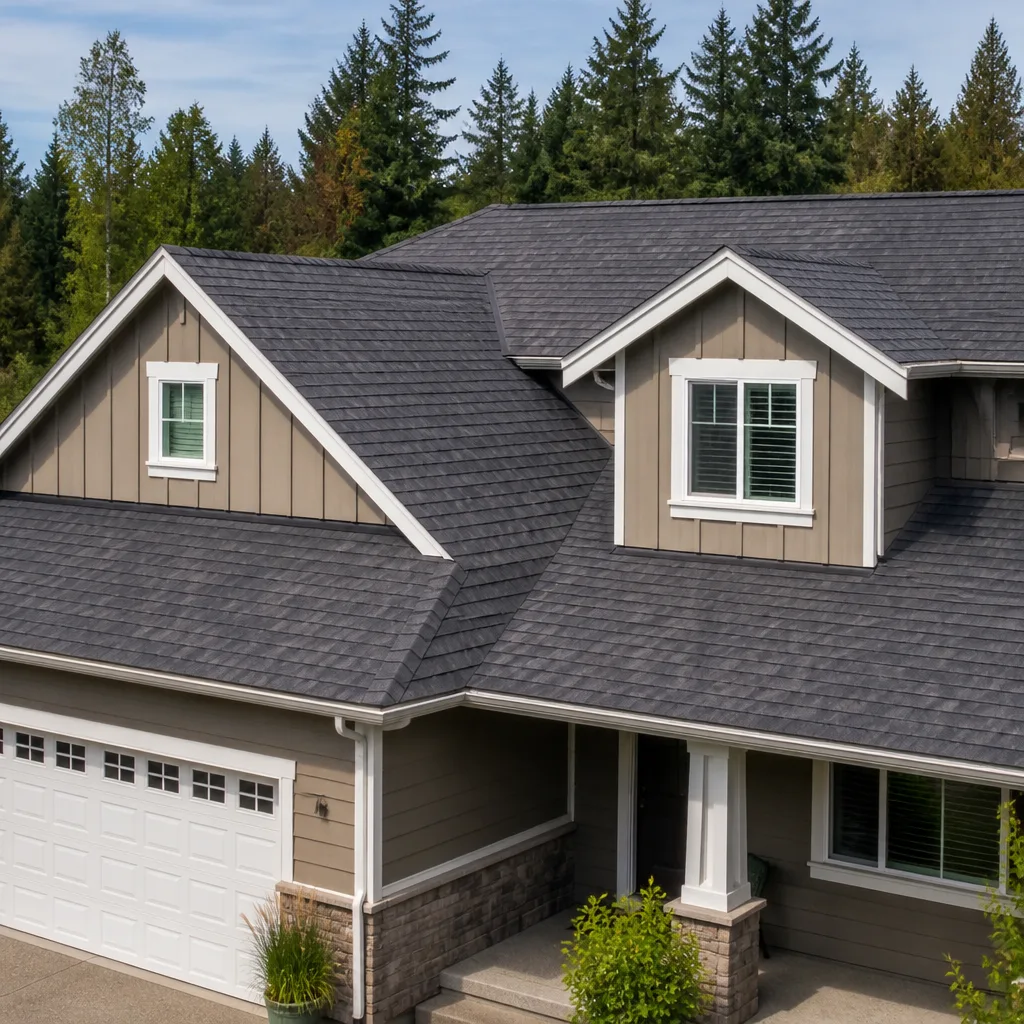 Architectural shingles
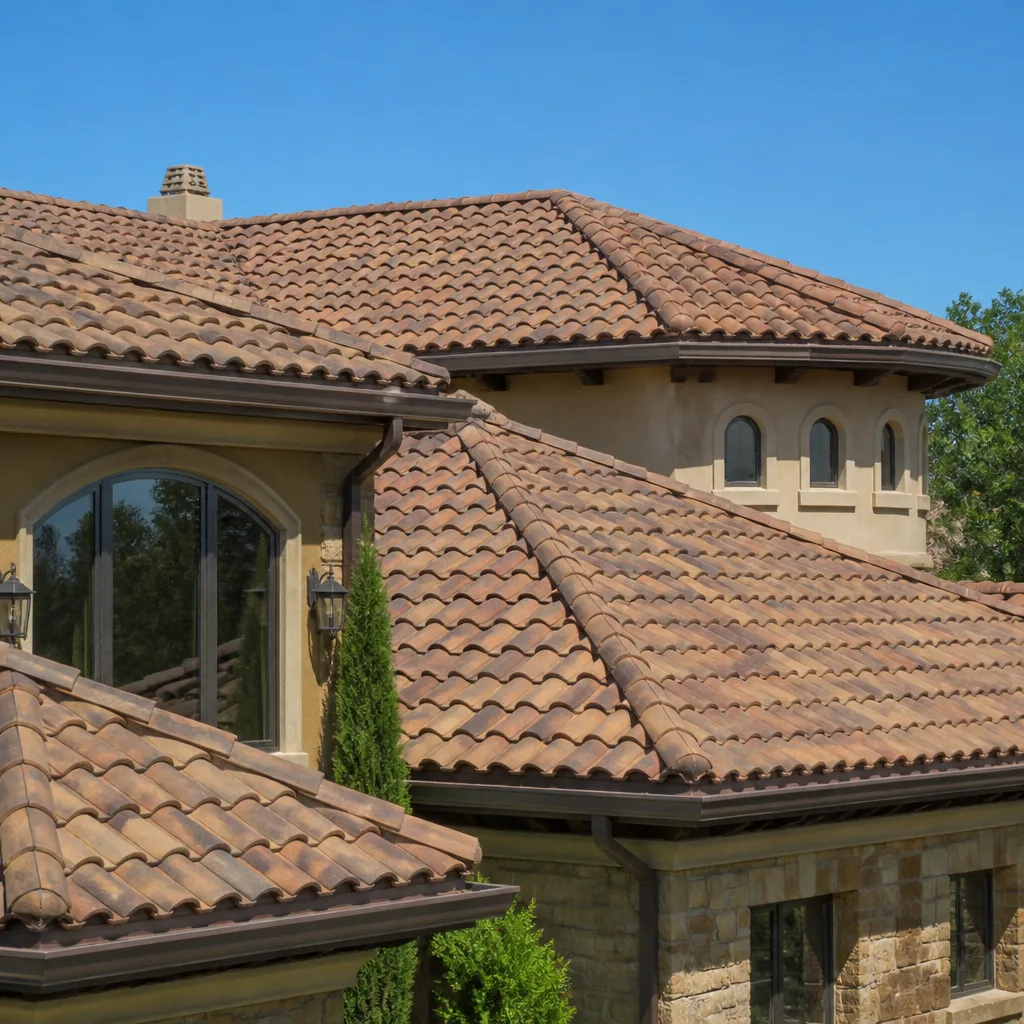 Tile roofing
 GAF
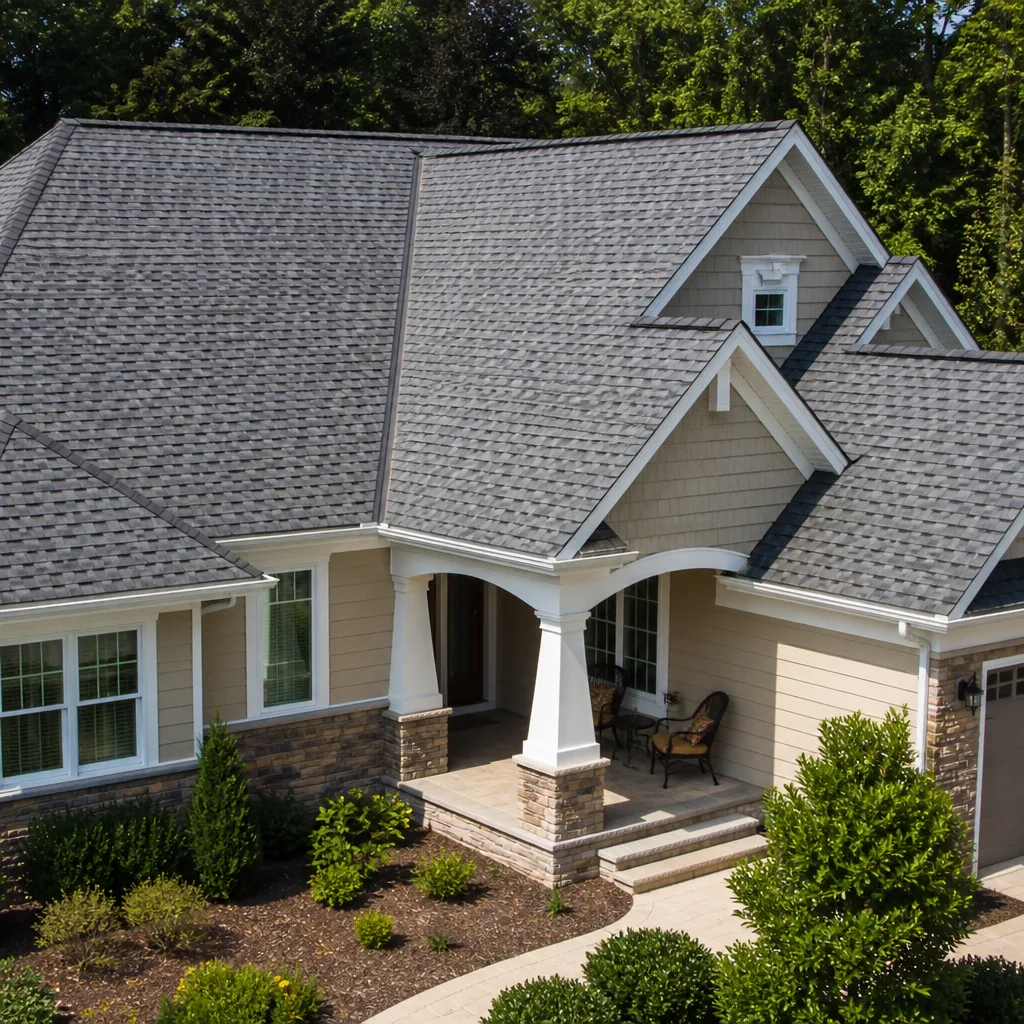 Owens Corning
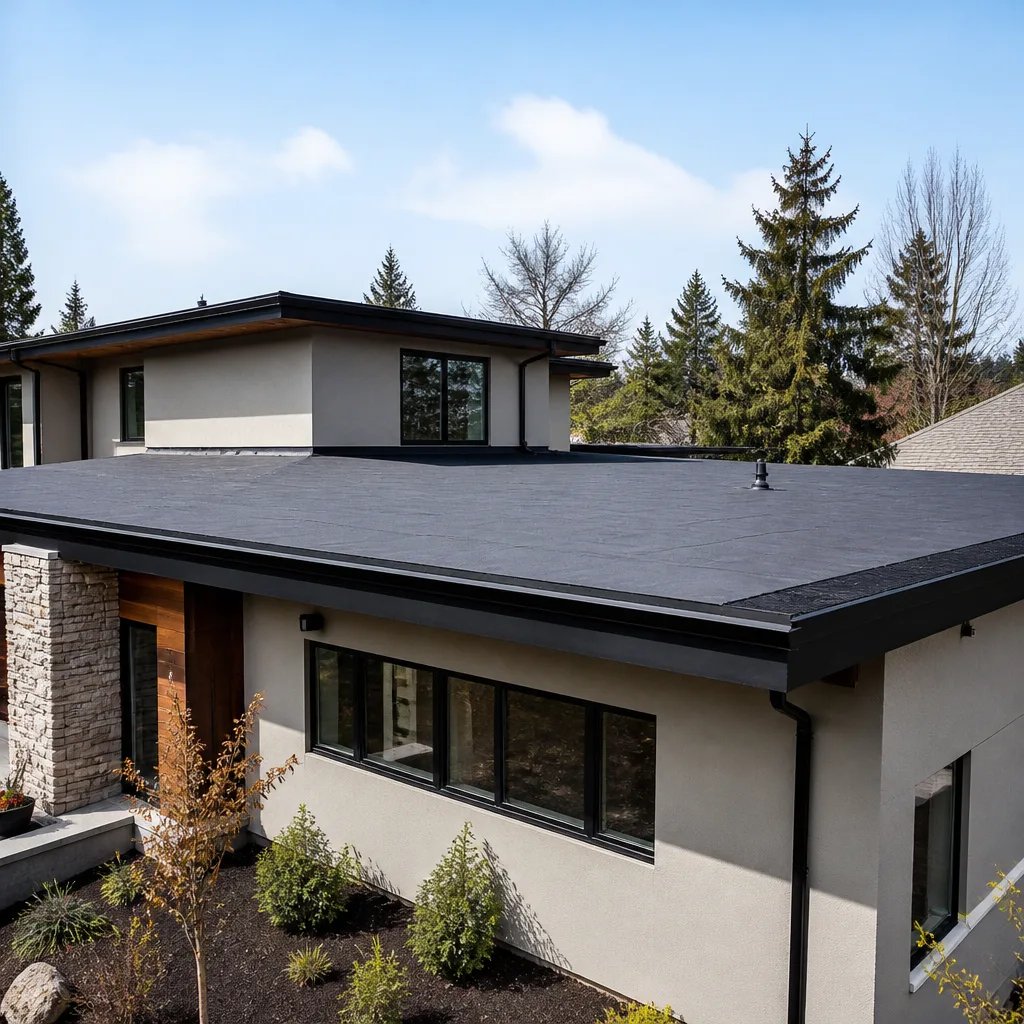 Flat & low-slope
Free roof inspection with deck photos before we talk money - GAF and Owens Corning certified installation
Choosing the Right Roofing Brand: A Buyer’s Guide for Pompano Beach
A shingle labeled with a long warranty can still fail early in Pompano Beach if the product was never approved for this market’s wind and heat. That is the uncomfortable part of buying a roof that almost no one tells you up front: brand prestige and warranty length are the two easiest things to market and the two least useful things to compare when you’re standing on a Broward County roof. What actually decides whether a roof holds is whether the product line is approved for this exposure, and whether the crew installing it knows the whole system, not just the top layer. This guide walks you through approval, brand comparison, installation, and warranty reading, so you can judge a roofing brand by performance instead of a brochure.
Quick Answer
The best roofing brand in Pompano Beach is the one whose specific product line carries the required Florida product approval, matches your roof’s wind and heat exposure, and is installed as a complete system by a contractor who can show you the approval paperwork before the first bundle goes up. Brand names like Owens Corning, IKO, Atlas, and Tamko all make products that can work here, but approval and installation quality matter more than which logo is on the wrapper.
Styles & brands we work with
- Architectural shingles
- Metal roofing
- Tile roofing
- GAF
- Owens Corning
- Flat & low-slope
Table of Contents
- What Do Miami-Dade NOA and Florida Product Approval Actually Mean?
- How Do the Major Shingle Brands Compare for Pompano Beach?
- Why Installation Quality Beats Brand Tier Every Time
- Which Brand and Product Combinations Hold Up After a Storm?
- How to Read a Shingle Warranty for Coastal Exclusions
- The Questions That Reveal Whether a Contractor Knows the System
- Repair or Replace: Where Brand Choice Actually Matters
- Common Mistakes to Avoid
What Do Miami-Dade NOA and Florida Product Approval Actually Mean?
Miami-Dade Notice of Acceptance (NOA) is a document issued by Miami-Dade County confirming that a specific building product has been tested and approved for use in that county’s high-velocity hurricane zone. Florida Product Approval (FPA) is the statewide equivalent: a listing in the Florida Building Commission’s approval database showing that a product has met the testing standards required for use in Florida. Both exist because the state takes wind uplift seriously, and both are searchable by product and manufacturer.
Here is the part that surprises homeowners. A shingle line can be sold nationally and advertised heavily and still not carry the approval you need for a particular assembly. Approval isn’t granted to a brand. It’s granted to a product, often to a specific combination of shingle, underlayment, and fastening pattern. Change one component and the approval may no longer apply to what’s on your roof.
Pompano Beach sits in Broward County, and Broward has its own approval rules that track closely with the state system. That means a roof installed here needs to be documented as an approved assembly, not just a familiar name.
How to look up a product’s approval status
- Ask your contractor for the exact product name and any listed assembly components: shingle line, underlayment, and fasteners.
- Search the Florida Building Commission’s product approval database by manufacturer or product name.
- Confirm the approval lists the assembly as installed, not just the shingle alone.
- Cross-check Miami-Dade NOA listings if your contractor references them specifically.
- Ask for the approval number in writing before work begins, and keep it with your contract.
If a contractor can’t produce that number or can’t explain how the assembly matches it, that’s your signal to slow down. A roof that isn’t documented to an approved assembly can create problems at resale, at inspection, and with your insurer later. Getting this right is a big part of what a proper Rutherford Roof Repair inspection is for.
How Do the Major Shingle Brands Compare for Pompano Beach?
The brands we work with – Owens Corning, IKO, Atlas, Tamko, and a few others across premium and value lines – all make products that can perform well here. The useful comparison isn’t brand against brand. It’s product line against product line on four measures that actually matter in South Florida: wind rating, algae resistance, thermal performance, and warranty transferability.
Wind rating
Wind rating tells you the tested wind speed a shingle assembly is rated for. Higher-rated lines exist across every major brand, but the rating only applies when the shingle is installed with the specified underlayment and fastening pattern. A high wind rating printed on a wrapper means nothing if the installer uses a different underlayment than the approved assembly calls for.
Algae resistance
Algae streaking is a common look on roofs across Pompano Beach. Many shingle lines include copper-infused granules designed to resist it. This is a product-line feature, not a universal one, so it’s worth asking which specific line includes it.
Thermal performance
Reflective and cool-roof ratings vary by product. In a hot climate, a shingle line rated for solar reflectance can make a difference in attic heat. Ask what the reflectance rating is for the specific product proposed, not just the brand.
Warranty transferability
Manufacturer warranties usually transfer to a new owner once, within a set window after the sale, and often only when the roof was installed by an approved contractor using the full system. If you plan to sell, transferability may matter more than the headline warranty length.
- Premium lines (for example Owens Corning): broader color ranges, higher-tier warranties, and often the strongest wind-rated assemblies.
- Value lines (for example IKO, Tamko): solid performance at a lower material cost, with fewer premium features like enhanced algae or reflectance ratings.
- Mid-range and specialty (for example Atlas): good middle ground, with product-specific features worth comparing line by line.
We’ve seen enough roofs in this market to know the honest answer is usually a specific product within a brand, not a whole brand. Matching that product to your roof’s exposure, your budget, and your resale plans is the real decision.
Why Installation Quality Beats Brand Tier Every Time
A premium shingle installed as a mismatched system will underperform a value shingle installed correctly. This is the single most important point in this guide, and it’s the one most brand marketing ignores. The roof is a system: shingle, underlayment, fasteners, flashing, and ventilation, all working together. Get any one piece wrong and the rest is compromised.
In Pompano Beach, heat and wind are the two forces that test a roof. Heat ages underlayment and stresses sealants. Wind finds every weak point: an under-driven nail, a missing starter course, a flashing detail that wasn’t sealed correctly. None of these are brand problems. They’re installation problems.
What a correct installation looks like
- Underlayment matched to the shingle’s approved assembly. The product approval usually names the underlayment; if it’s swapped, the approval may not apply.
- Fasteners specified by the manufacturer. Nail type, length, and placement all affect wind uplift performance.
- Ventilation balanced to the roof’s size. Poorly ventilated attics run hotter, and that shortens roof life regardless of shingle quality.
- Flashing installed to standard. Valleys, penetrations, and wall transitions are where leaks start.
- Ice and water shield in the details that need it. Even in a mild climate, the right water barrier in vulnerable spots is part of a sound roof.
One reason we lean repair-first is that replacing a whole roof when the problem is a flashing detail or a localized shingle failure is the wrong answer. Inspecting the whole assembly first, including underlayment and fastening, tells you whether you’re looking at a repair or a genuine replacement. That diagnostic step is what our roof repair work always starts with.
Which Brand and Product Combinations Hold Up After a Storm?
We can’t quote inspection records from a file cabinet, and anyone who claims to is telling you a story. What we can tell you is what patterns show up in our experience working in Broward County after storm seasons and in re-roofing calls: the roofing brand rarely shows up as the variable that failed. The variable that fails is usually installation or assembly mismatch.
That said, some combinations do show up more often on roofs that hold up through a storm season:
- Shingle lines rated at the higher wind uplift level, installed with the manufacturer’s specified underlayment and a full perimeter seal.
- Assemblies documented to the approved product approval, with the paperwork kept with the roof records.
- Roofs with balanced ventilation, which keeps attic temperatures lower and reduces stress on sealants over time.
- Detailed flashing and valley work, which is often where a failing roof breaches first, regardless of which brand is up top.
And the combinations that tend to come back for re-roofing earlier than expected? Lower-tier material lines installed without the specified assembly, roofs with no documented approval, and re-roofs where flashing or ventilation was reused instead of replaced. On those, the second roofer inherits the first roofer’s shortcuts.
This is why a repair-first specialist is useful. We don’t have a single-brand obligation. If one line is approved for your assembly and another isn’t, the choice is made for us by the documentation. If several lines are approved, we can match the product to your budget and style rather than to a corporate partnership.
How to Read a Shingle Warranty for Coastal Exclusions
Manufacturer shingle warranties often include exclusions tied to distance from saltwater. Those exclusions can apply to a meaningful share of properties in Florida, and they’re written in the fine print most buyers never read. The point isn’t to avoid a warranty. It’s to know whether yours actually covers the home before you rely on it.
When you look at a warranty, work through this list:
- Find the definition of “coastal” in the warranty. Each manufacturer defines the distance differently, and it’s the definition that governs.
- Check whether your property falls inside it. If it does, look for what the warranty does and doesn’t cover.
- Look for the required installation standards. Most warranties require installation per the manufacturer’s written instructions, using their approved accessories. Any deviation may void coverage.
- Confirm transferability terms. Ask how the transfer works, the window to file, and whether it requires the original contractor’s paperwork.
- Note what isn’t covered. Common carve-outs include certain types of damage, foot traffic, and repairs done by others.
Ask your contractor for the actual warranty document before signing, not a summary. A written, line-item estimate should also spell out which product line and assembly is proposed, so you can match it against the warranty language. Compare that with the standard we hold our roof replacement quotes to: product named, assembly listed, approval number noted.
In a hot, humid market, a warranty with an honest scope is more useful than a headline length that gets excluded on a technicality. That’s the conversation we have with every homeowner before recommending a product.
The Questions That Reveal Whether a Contractor Knows the System
You can learn more about a roofing contractor from the questions they can and can’t answer than from anything in their marketing. Try these before you sign.
- “What is the product approval number for this assembly?” A contractor who knows the system can answer this or find it quickly. A contractor who can’t may be installing off-spec.
- “Which underlayment does the assembly call for, and will you use it?” Any hesitation here is a red flag. The underlayment is part of the approved assembly.
- “What is the wind rating on this specific line, and does it apply to the full assembly?” The answer should name the product line and confirm the rating applies to the assembly as installed.
- “How will you document the roof for resale and insurance?” A contractor who does this routinely will have a standard answer.
- “What does the warranty exclude for a home near saltwater?” The right answer shows they’ve read the warranty, not just the sales sheet.
- “What will you do about ventilation?” A system-aware contractor treats ventilation as part of the job, not an add-on.
- “Will you give me a written, line-item estimate?” This separates a professional from a phone-quote operation.
For more on how a local roofer should approach a roof in this market, see our guide to Pompano Beach roofing.
Repair or Replace: Where Brand Choice Actually Matters
Brand choice only matters when you’re buying new material. If the roof can be repaired, spending money on a premium product line is a waste. This is why the first question is always whether the roof needs material at all.
An inspection sorts that out. It looks at shingle condition, underlayment age, flashing, fasteners, and attic ventilation, then tells you whether you’re looking at a localized repair or a roof that’s reached the end of its service life. When repair is the right answer, the brand conversation doesn’t apply. When replacement is the right answer, it’s the whole conversation.
The Rutherford Roof Repair approach is built around that distinction. Rutherford Roof Repair signals it in the name: repair first, replacement only when it’s genuinely the right answer. If your roof is in the middle – some wear, some life left – the honest recommendation is often a repair that buys you time, and then a replacement when the roof tells you it’s ready.
When replacement is the answer, that is when the seven manufacturers we work with come into play. Owens Corning, IKO, Atlas, Tamko, and the rest across premium and value lines give us room to match material to budget, style, and warranty tier. It also means the recommendation is based on your roof and your assembly, not on a sales quota for one brand.
Common Mistakes to Avoid
- Buying a brand instead of a product and assembly. Approval is granted to specific product combinations, not to brands. Confirm the whole assembly is documented.
- Trusting warranty length over warranty scope. A fifty-year warranty with a coastal exclusion may not cover your Pompano Beach home. Read the exclusions before the length.
- Not checking the approval number before installation starts. Once the shingles are up, verifying becomes much harder. Ask for documentation in the contract.
- Skipping the inspection to get straight to a quote. A quote without a diagnosis is just a price for material. It doesn’t tell you whether you need replacement at all.
- Letting a contractor reuse flashing or underlayment to save money. This is the most common shortcut, and it’s often where a new roof starts failing.
- Accepting a verbal estimate. A written, line-item estimate with the product named and the approval number listed protects you if something goes wrong.
- Ignoring attic ventilation. Poor ventilation shortens roof life in this climate regardless of which brand is on the roof. It’s part of the system.
See the difference
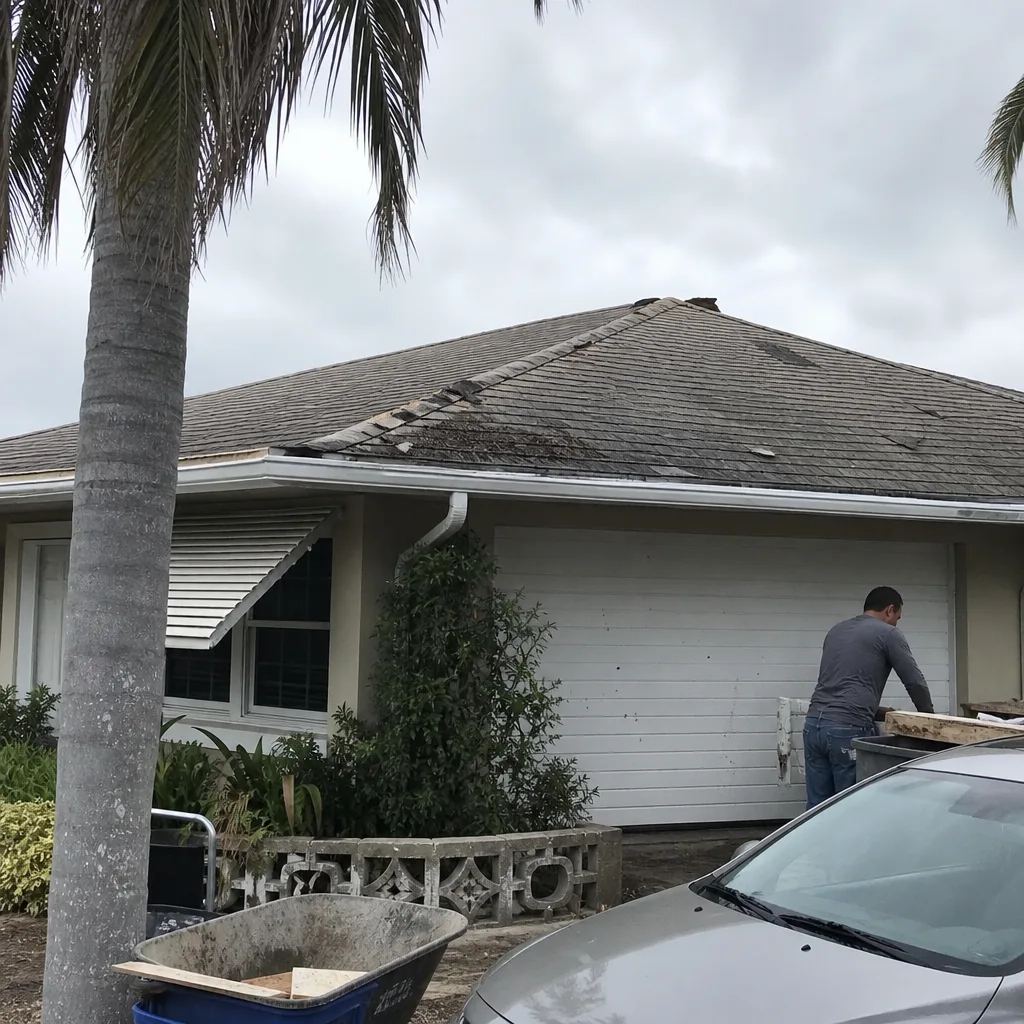 Before
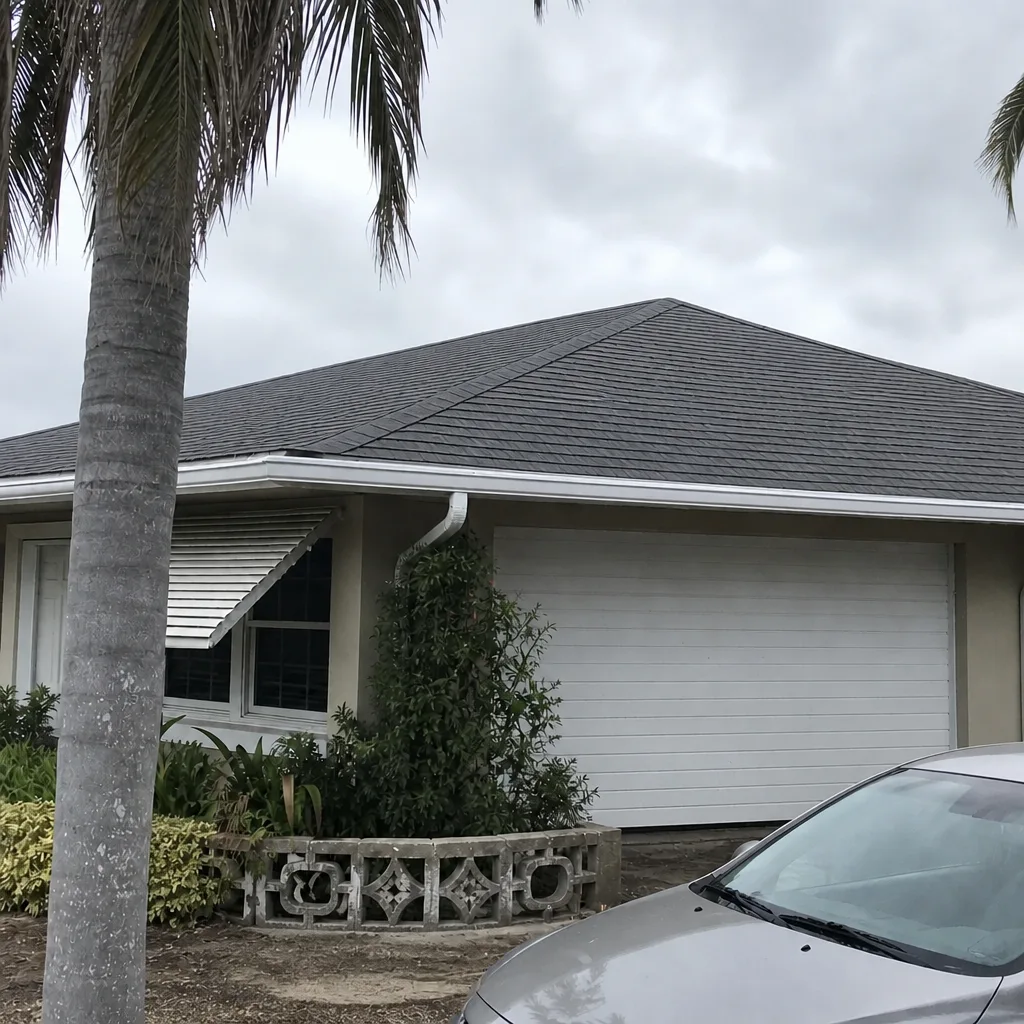 After
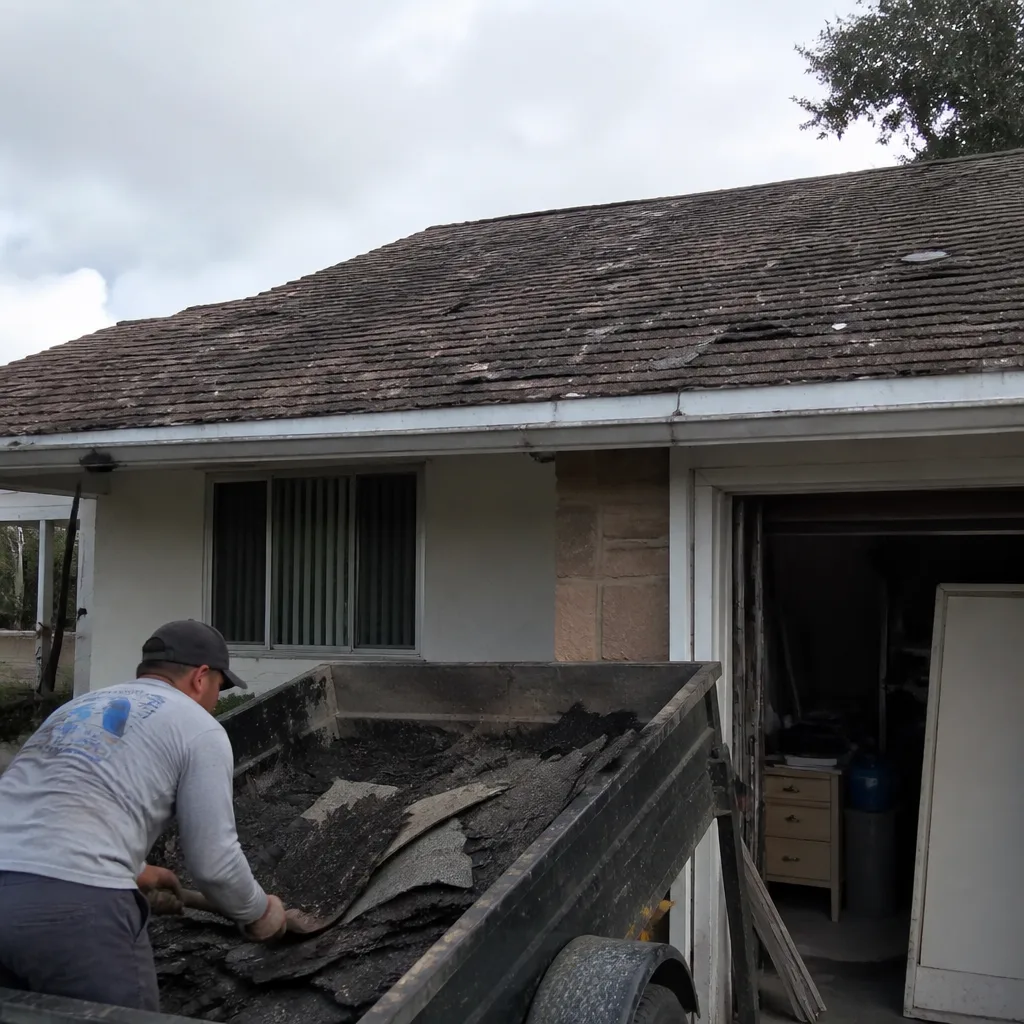 Before
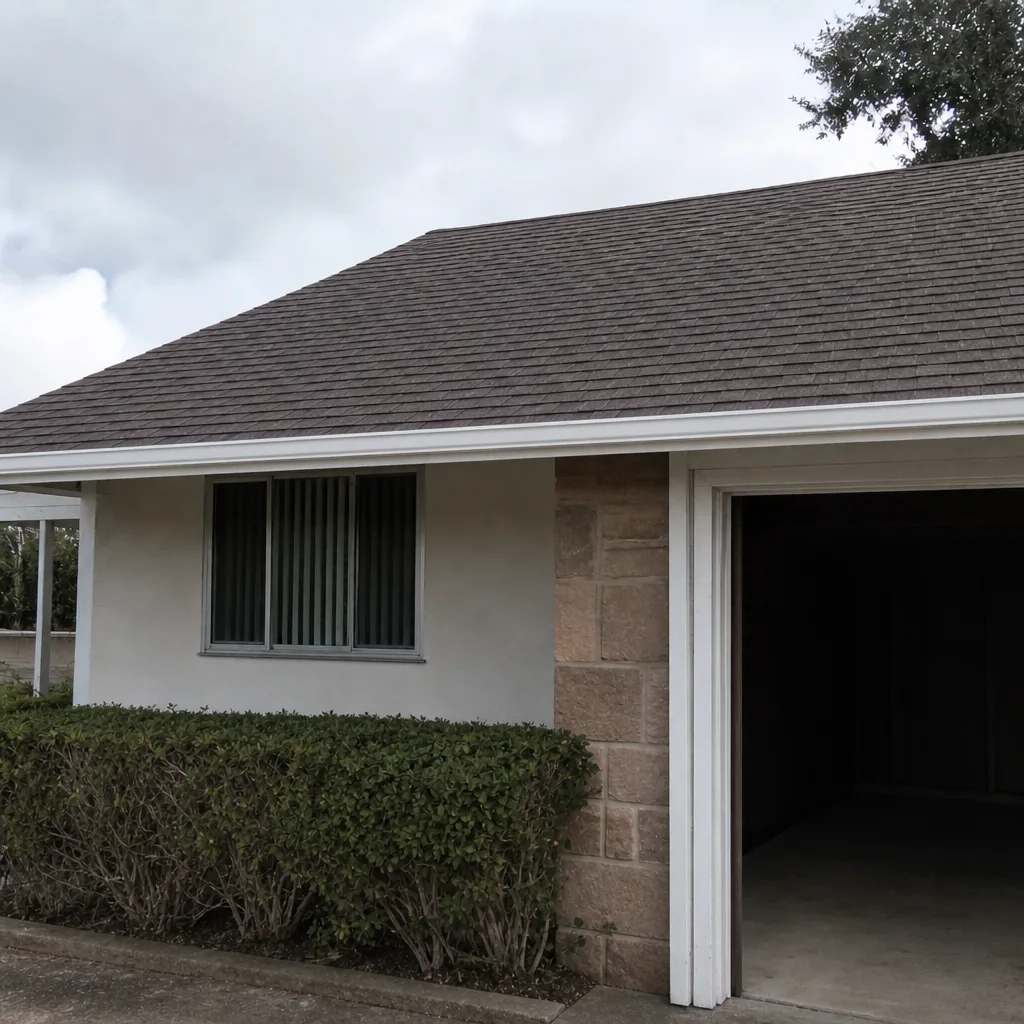 After
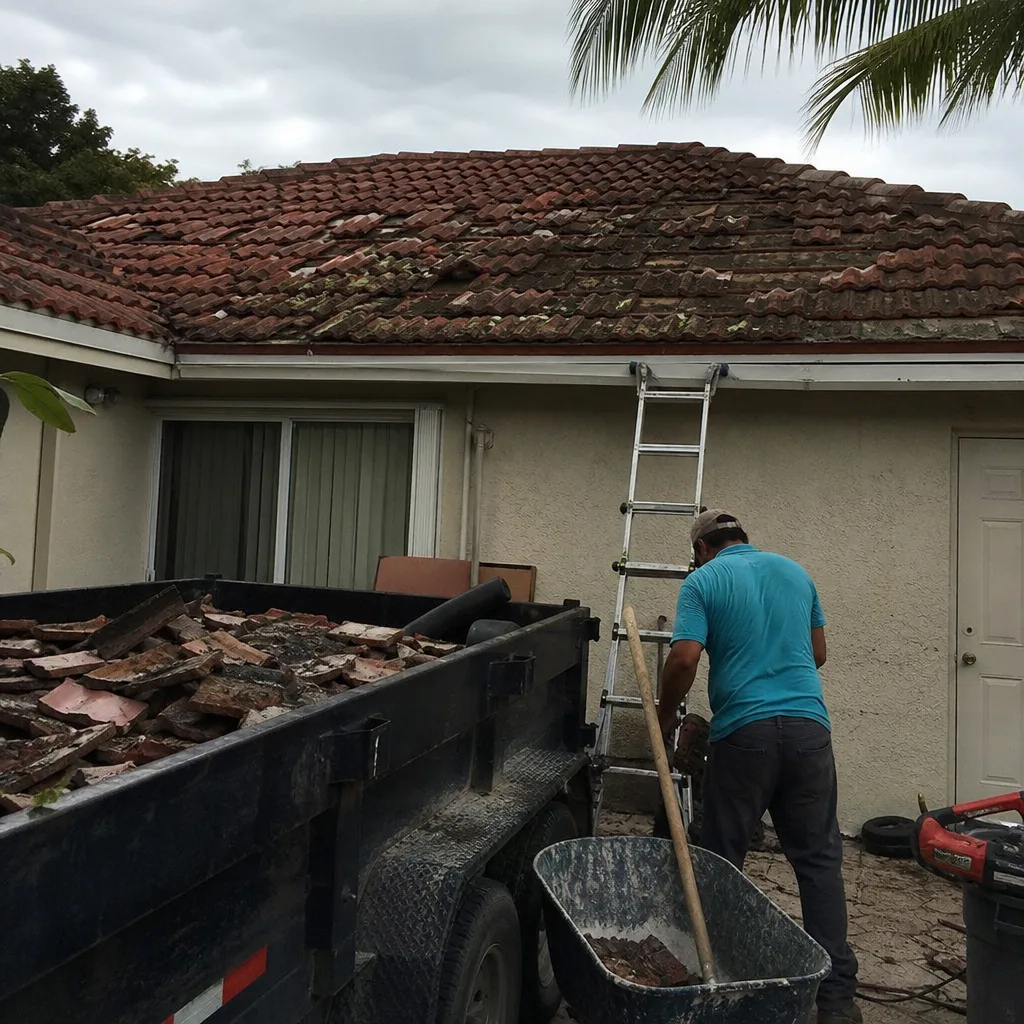 Before
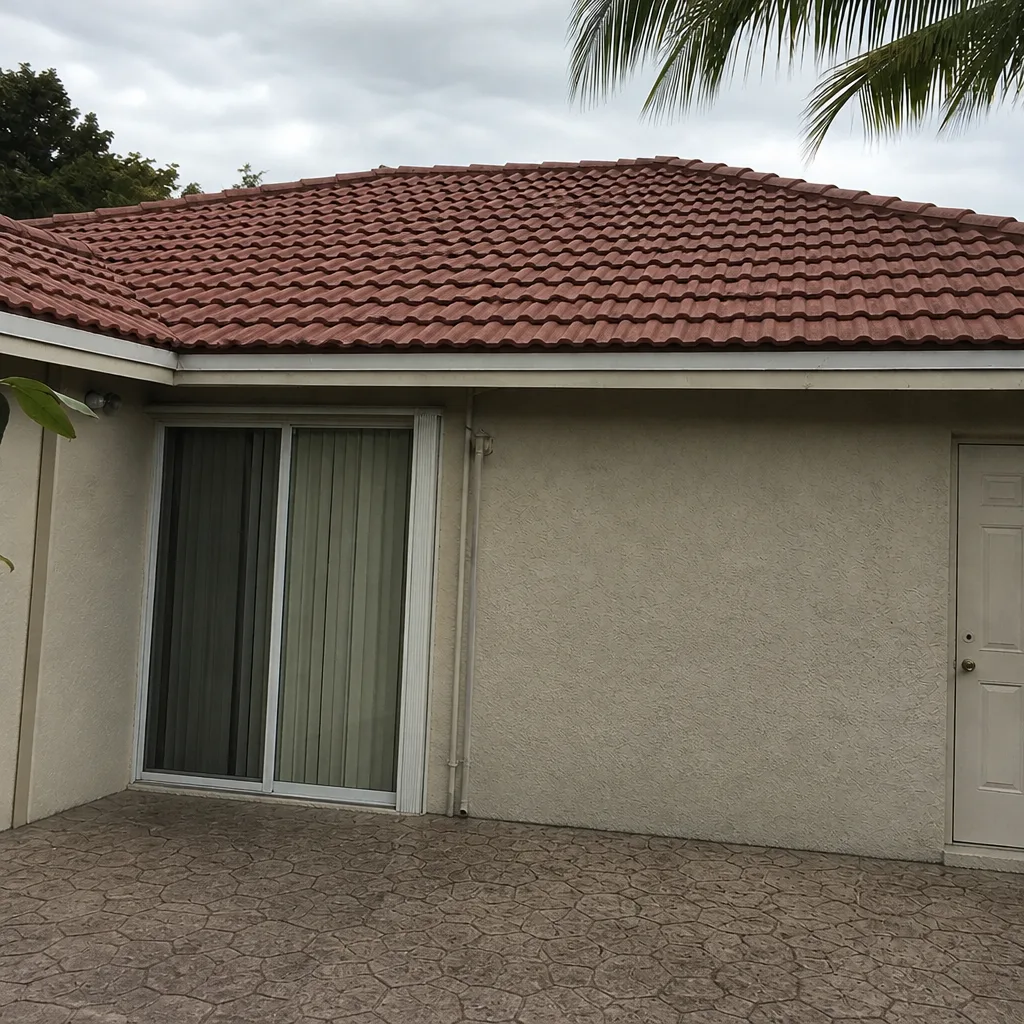 After
When to Call a Professional
Call a professional if you see missing or lifted shingles, granule loss on a regular basis, visible staining inside or on the ceiling, or sagging in the roof line. Call if your roof is old enough that you’re unsure whether repair still makes sense. Call if a storm has passed and you’re not sure what it did, or if you’re planning to sell and need documentation of the roof for a buyer. Call if you’re working through an insurance claim and need an inspection report to support it.
Roof work at height is dangerous. Missing shingles, damaged flashing, and especially anything that requires getting onto the roof itself should not be a homeowner project. A trained professional with the right equipment and fall protection is the right call in every one of these cases.
Rutherford Roof Repair offers free estimates in Pompano Beach. Call (888) 361-4813. We answer 24/7. Fast dispatch from 7am to 7pm, Sunday through Friday.
Frequently Asked Questions
There isn’t one best brand, because the answer depends on which specific product line is approved for your roof’s assembly and exposure. Owens Corning, IKO, Atlas, and Tamko all offer lines that can work here, but approval and installation matter more than the name on the wrapper. The right product is the one documented to the assembly that will be installed.
A Miami-Dade Notice of Acceptance is a document confirming a product has been tested and approved for use in high-velocity hurricane zones, and Florida Product Approval serves the same purpose statewide. Your roof needs to be installed as an approved assembly, and that approval should be documented in writing. Ask your contractor for the approval number before the shingles go up.
Read the warranty’s coastal exclusion and the definition of “coastal” it uses. If the distance in that definition covers your property, the warranty’s coverage may be limited despite the headline length. Ask for the warranty document before you sign, not after.
Often yes. Localized damage, damaged flashing, and isolated failures are usually repair problems, not replacement problems. A thorough inspection is what tells you which you have, and it should come before any price conversation. That is the repair-first approach we work from at Rutherford Roof Repair.
Most cities require a permit for roof replacement, and Broward County has inspection requirements tied to that permit. Ask your contractor who is pulling the permit and how the inspection will be scheduled. A written estimate should spell this out clearly.
Shingle roof life in this climate depends on product line, installation quality, and ventilation, and it varies considerably. There’s no single number that applies to every roof. A professional inspection is the way to know the condition of yours, and whether repair or replacement is the right next step. Call (888) 361-4813 for a free estimate.
The Bottom Line
The best roofing brand in Pompano Beach isn’t a logo. It’s the specific product line that’s documented as an approved assembly for your roof, installed by a contractor who can show you the approval, name the underlayment, and read the warranty exclusions before work starts. Brand breadth helps because it lets a contractor match the product to your situation instead of pushing what they stock. Installation quality, ventilation, and assembly compatibility matter more than tier. And a repair-first approach means you don’t spend on new material if a targeted repair is the honest answer. Gather the documentation, ask the hard questions, and let the roof decide what it actually needs before you talk price.
Written by the team at Rutherford Roof Repair.