
Last updated November 15, 2026
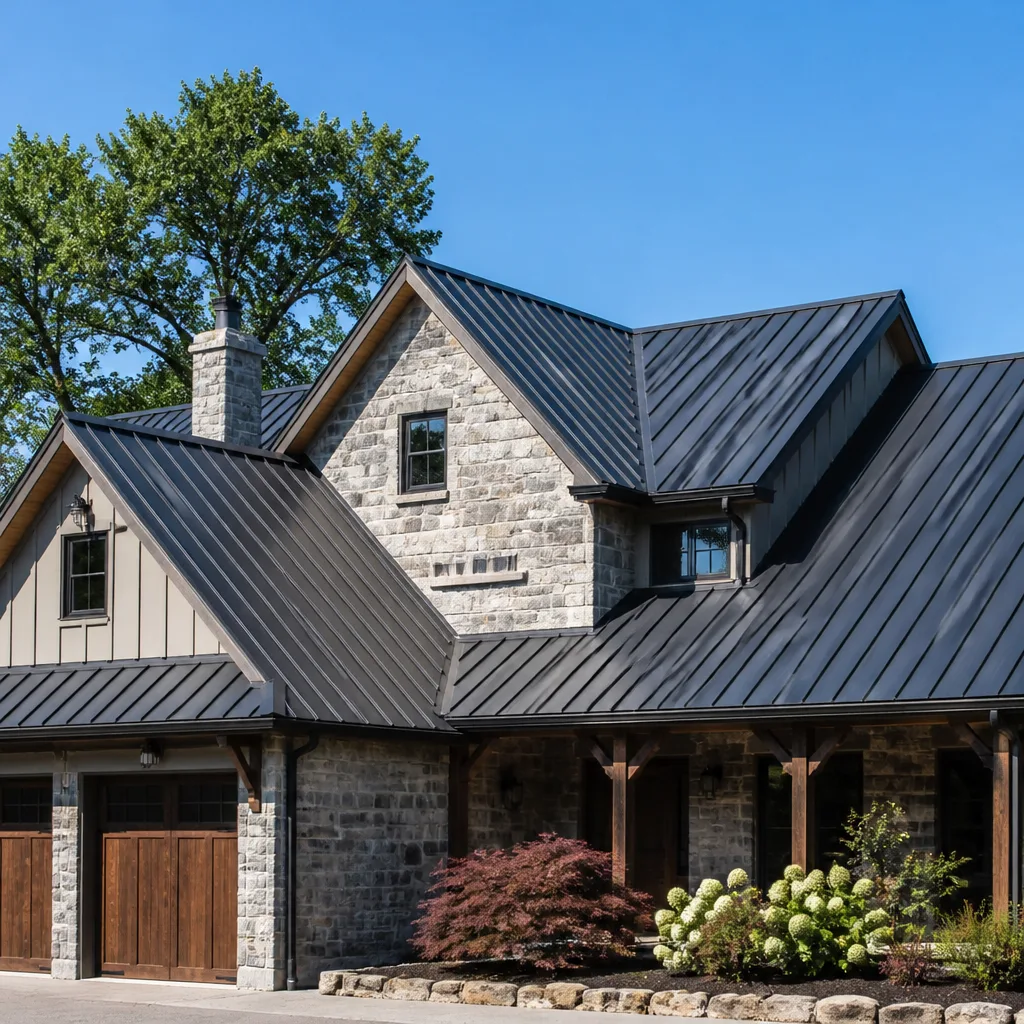 Metal roofing
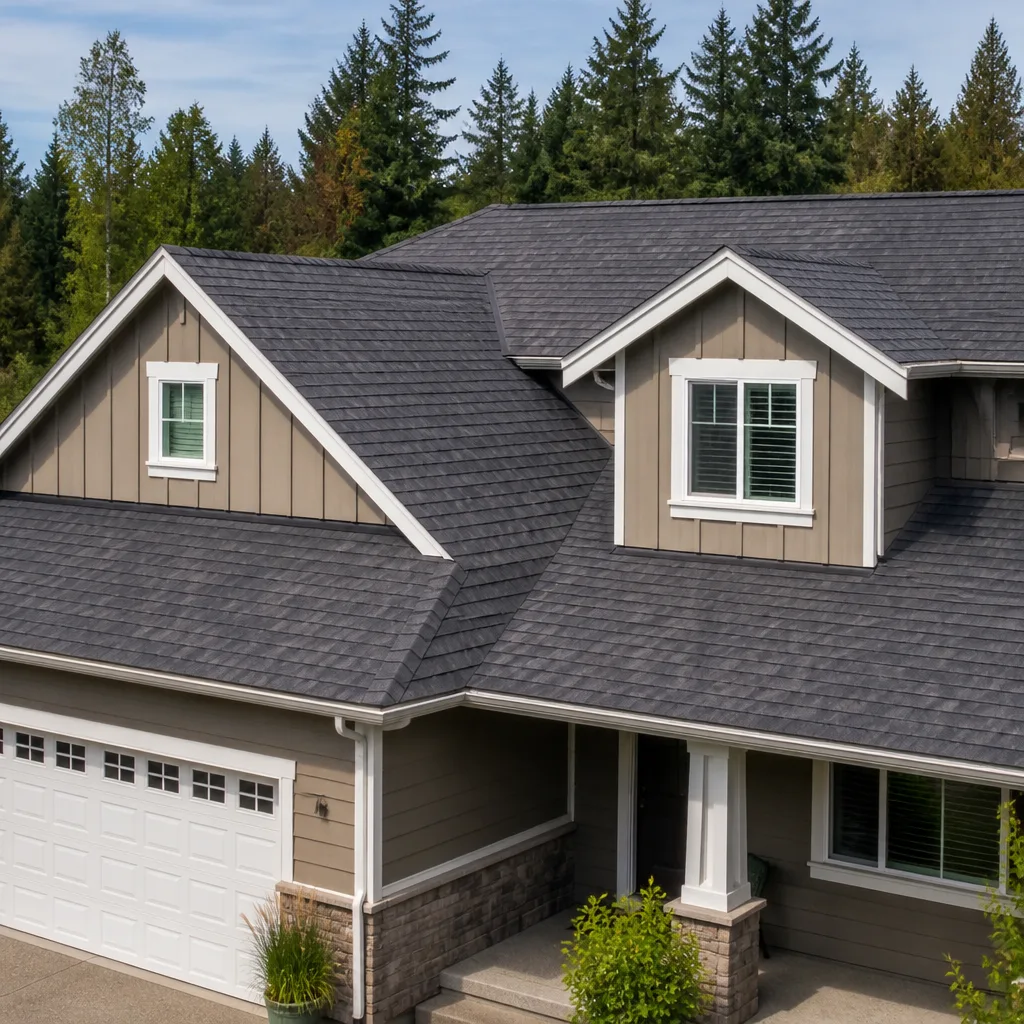 Architectural shingles
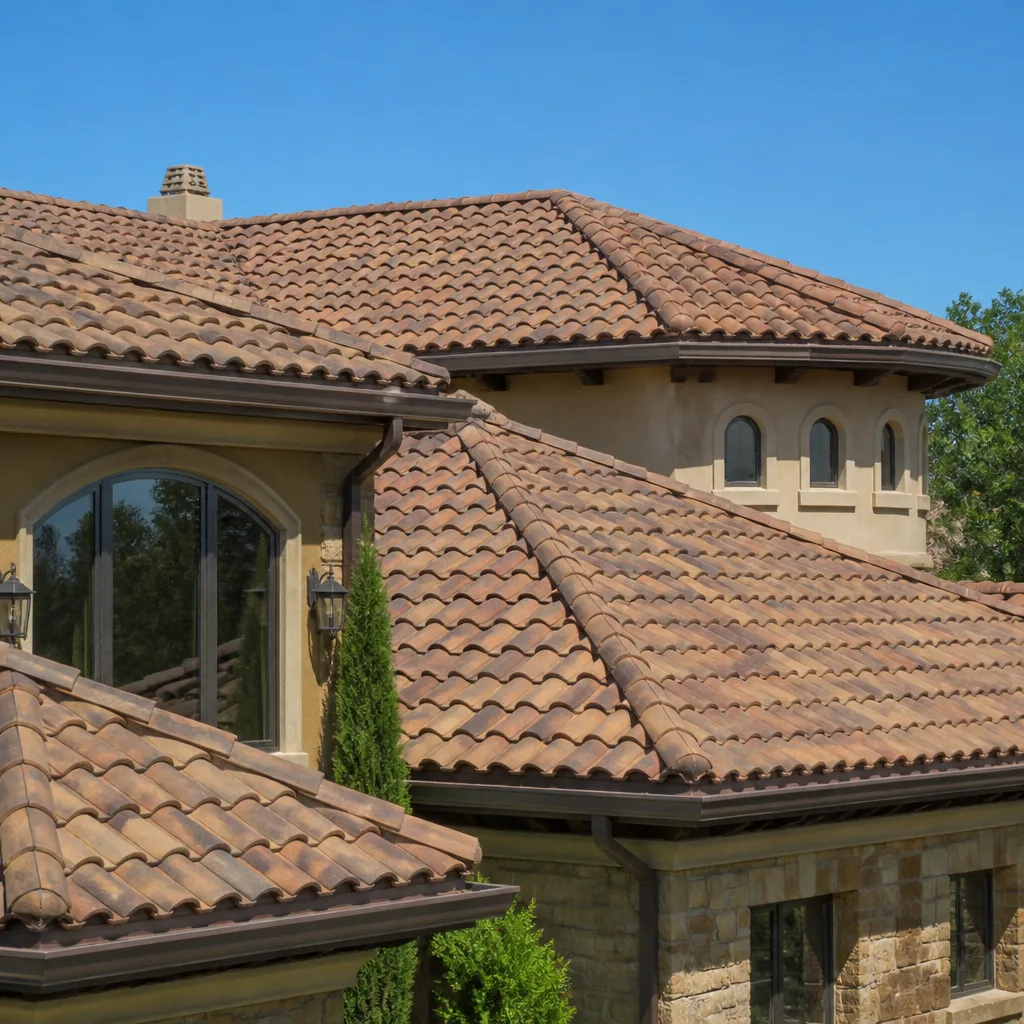 Tile roofing
 GAF
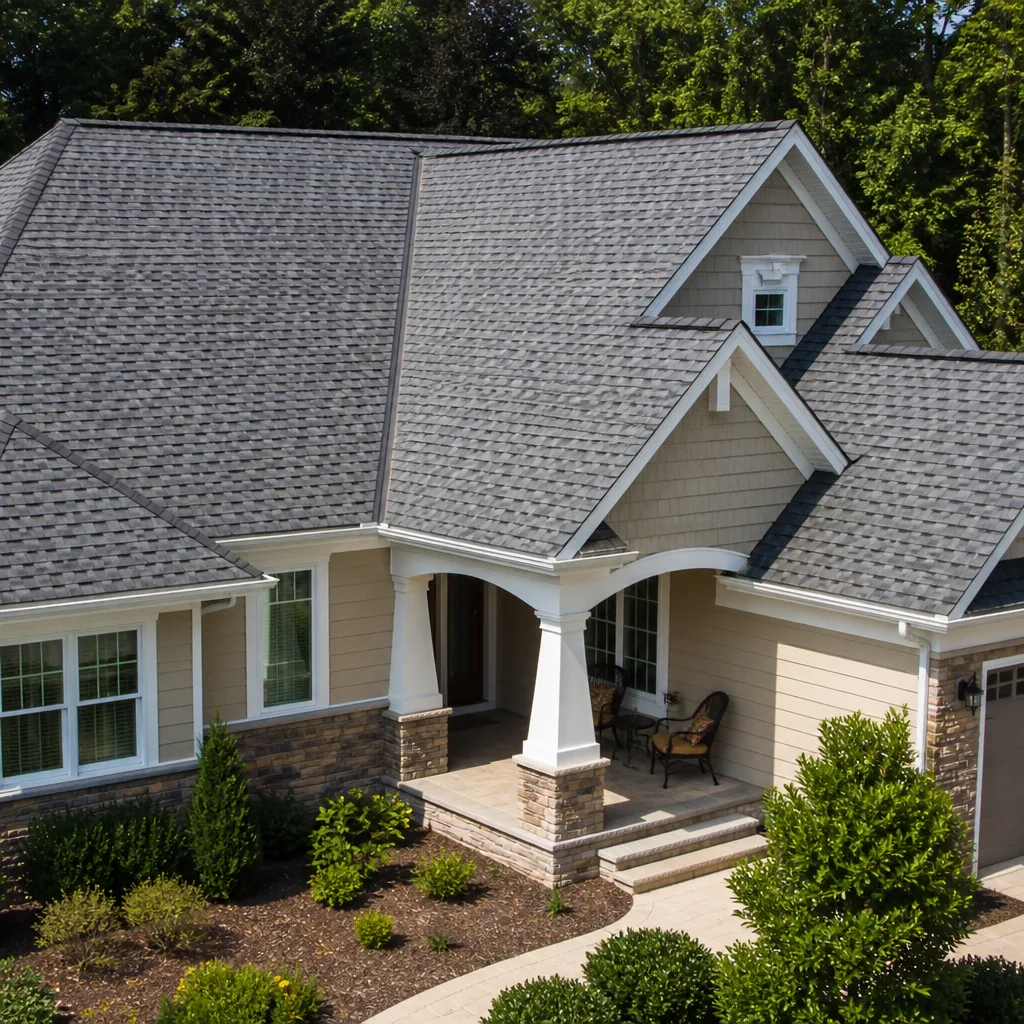 Owens Corning
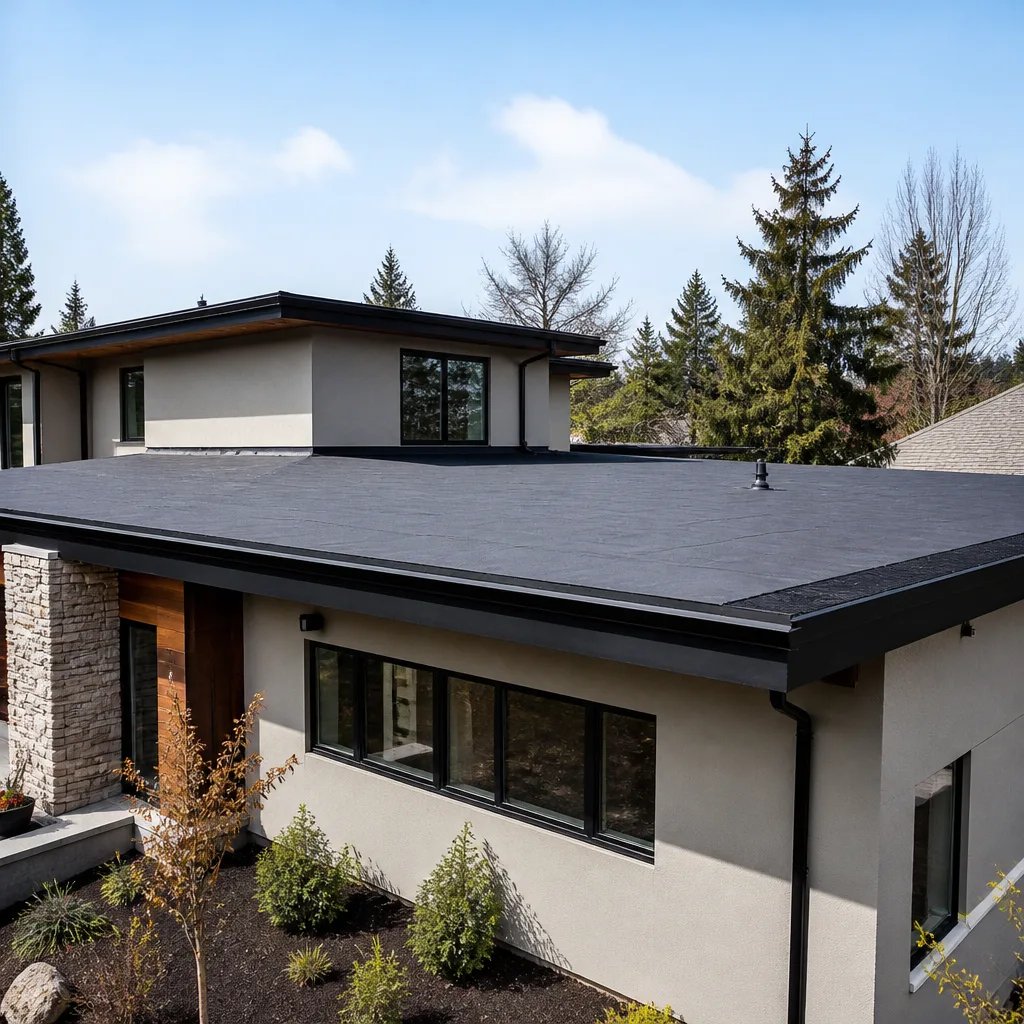 Flat & low-slope
Free roof inspection with deck photos before we talk money - GAF and Owens Corning certified installation
DIY vs Professional Roofing: The Pompano Beach Homeowner’s Decision Guide
Most guides to DIY roofing focus on skill and cost. Here in Pompano Beach, the deciding factor is often legal. A homeowner who strips and replaces shingles across a large share of the roof can trigger a code-compliance upgrade requirement without realizing it, and a policy clause buried in the insurance paperwork can leave self-performed work uncovered when a storm finally tests it. This guide covers where Florida law, Broward County permitting, and homeowner insurance policies draw the line, which small fixes a careful homeowner can still handle, and how a hybrid approach lets you do the prep while a licensed contractor carries the permit and inspection. If you live in Pompano Beach, you need the local version of this decision, not a generic one.
Quick Answer
In Pompano Beach, small surface fixes like re-sealing a loose flashing or replacing a cracked shingle are generally safe for a careful homeowner to handle. Anything that disturbs the roof deck, changes more than a small area of covering, or requires a building permit should go to a licensed roofing contractor, because Florida’s owner-builder rules and most insurance policies put the legal and financial risk on you when you self-perform. The dividing line is narrower than most DIY content admits. When in doubt, a professional inspection is the cheaper first step.
Styles & brands we work with
- Architectural shingles
- Metal roofing
- Tile roofing
- GAF
- Owens Corning
- Flat & low-slope
Table of Contents
- Where Florida Law Draws the Line on DIY Roofing
- The Owner-Builder Exemption: What It Actually Permits
- The Insurance Clause That Voids Coverage on Self-Performed Work
- The 25% Rule and Substantial Improvement in Pompano Beach
- The Three Repairs You Can Legitimately Do Yourself
- Why DIY in a Hurricane Zone Carries Higher Stakes
- The Legal Hybrid: Contractor for Permits, You for Prep
- What Each Path Costs in Pompano Beach
Where Florida Law Draws the Line on DIY Roofing
Florida does not ban homeowners from working on their own roof. It does something subtler and more consequential: it creates a narrow exemption that most people misread as a green light, then surrounds that exemption with permit, disclosure, and code requirements that apply whether you hired someone or not. The result is that a Pompano Beach homeowner can legally do some roof work and still end up in a worse position than if they’d never touched it.
Here’s the structure of the law as it applies to residential roofing:
- You may work on a home you own and occupy. The owner-builder exemption is tied to a property that is your primary residence, not a rental, a flip, or a second home.
- You become the responsible party. When you self-perform under the exemption, you take on the role a licensed contractor normally fills: pulling the permit, meeting the inspector, and warranting the work.
- The work must still meet code. The exemption is about who can perform the work, not what standard it has to meet. A self-installed roof must pass the same inspection a contractor’s roof would.
- Some work is off-limits regardless. Anything involving the structural integrity of the roof, electrical connections, or work that requires an engineering sign-off falls outside what a homeowner can reasonably self-perform.
For most Pompano Beach homeowners, the practical takeaway is that the legal space for DIY is real but small. It covers cosmetic and minor repair tasks. It does not cover re-roofing, deck replacement, or anything that changes the roof’s profile or covering system. We’ve talked with enough homeowners mid-project to know the confusion is common, and it’s not their fault. The law is written for contractors, and the plain-English version rarely reaches the people it affects most.
The Owner-Builder Exemption: What It Actually Permits
The owner-builder exemption is the single most misunderstood piece of Florida roofing law for homeowners. It permits a homeowner to act as their own contractor on certain improvements to a home they own and occupy, which sounds like a broad authorization. In practice, it comes with conditions and a disclosure that most people sign without reading closely.
What the exemption generally requires:
- Ownership and occupancy. You must own the property and use it as your primary residence. The exemption does not extend to properties you rent out or intend to sell within a year.
- A signed disclosure. Before a building department will issue a permit to a homeowner acting as their own contractor, the homeowner typically signs a document acknowledging that they are assuming the contractor’s responsibilities, including liability for worker injuries and defects. This is the disclosure most people skim. It transfers real risk onto you.
- Direct supervision. If you hire helpers (not a licensed contractor), you’re responsible for them as an employer would be. That includes workers’ compensation exposure if someone is injured on your roof.
- Full code compliance. The inspector does not grade on a curve. Your work is held to the same standard as a licensed contractor’s.
The disclosure is where the real cost hides. When a homeowner signs it, they’re accepting liability that a licensed contractor would normally carry through insurance and bonding. If a helper falls, or the roof fails and damages the interior, the homeowner’s own insurance becomes the first line of defense, and that’s exactly where the next section comes in. Before you sign anything at the building department, read every line. If a term is unclear, ask the permit clerk to explain it in plain language. That conversation is free, and it’s the one most homeowners skip.
The Insurance Clause That Voids Coverage on Self-Performed Work
Most homeowner policies include language that limits or excludes coverage for work the homeowner performed themselves, particularly on the roof. The clause rarely uses the phrase “self-performed.” It’s usually buried in definitions or exclusions, phrased as a condition about “faulty workmanship” or “work performed by or on behalf of the insured.” The effect is the same: if your own repair fails and water gets in, the insurer can deny the resulting claim.
This matters more in Pompano Beach than in most places because roof claims here are common and scrutinized. After a storm, adjusters look closely at the roof’s history. A repair that doesn’t match the surrounding materials, a patch that wasn’t permitted, or a flashing detail that wasn’t done to code all become reasons to reduce or deny a claim.
How to check your own policy before you pick up a caulk gun:
- Read the exclusions section first. Look for “faulty workmanship,” “defective work,” and “work performed by the insured.” Those phrases are the tripwires.
- Check the roof-specific endorsements. Many Florida policies have a separate roof schedule or endorsement that sets out conditions on repairs and replacements.
- Call your agent with a specific question. Not “am I covered?” That gets a vague answer. Ask: “If I repair this section of roof myself and it fails during a storm, will the resulting water damage be covered?” Get the answer in writing if you can.
- Note what your policy says about permits. Some policies condition coverage on work being permitted when required. An unpermitted repair can void coverage even if the work itself was fine.
We’re not insurance advisors, and we don’t interpret policies for our customers. What we can tell you is what we’ve seen: the claims that go smoothly are the ones where the work was documented, permitted, and done by a licensed professional. The claims that turn into fights are the ones where the homeowner did the work themselves and can’t prove it met code. That’s the pattern, and it’s worth knowing before you decide.
The 25% Rule and Substantial Improvement in Pompano Beach
This is the rule the opening of this guide flagged, and it’s the one buried in Florida’s building code framework that almost no DIY article mentions. The state’s “substantial improvement” threshold treats any renovation project that costs more than a set percentage of a building’s value as a substantial improvement, which can trigger a requirement to bring the entire structure up to current code, not just the part you touched. For roofing, the same principle can apply through local permitting rules on how much of the roof covering can be replaced before the project is treated as a full re-roof rather than a repair.
What this means for a Pompano Beach homeowner:
- The threshold is not intuitive. A homeowner replacing shingles across a large share of the roof may believe they’re doing a “repair.” The building department may classify it as a re-roof, which brings a different permit and a different inspection standard.
- Crossing the line changes the scope. Once a project is classified as a re-roof, the homeowner is responsible for meeting current code on the whole roof, not just the section that was damaged.
- The rule is not uniform across every jurisdiction. Pompano Beach has its own permit classifications, and the exact threshold is set at the local level. Before self-performing anything beyond a minor patch, ask the city’s building department how they’d classify your project.
- Insurance and code interact. A project classified as a re-roof that wasn’t permitted can create a coverage problem when a storm claim is filed later.
The takeaway isn’t that you should never touch your own roof. It’s that the “how much is too much” question needs to be answered by the building department, not by a YouTube video. A five-minute call to the permit desk in Pompano Beach will tell you more than an hour of research, and it’s the step that most DIY content skips entirely.
The Three Repairs You Can Legitimately Do Yourself
There are real repair tasks a competent Pompano Beach homeowner can handle without triggering a permit, breaching insurance conditions, or putting themselves in physical danger. Here they are, along with clear boundaries around each:
- Re-sealing loose or failing flashing around a chimney, vent, or skylight. Flashing seals are a maintenance item, not a structural repair. If the flashing itself is in good shape and just the sealant has failed, re-sealing is within reach for a careful homeowner. If the flashing is corroded or the leak is underneath it, that’s a different job. Roof access near a skylight or chimney carries real fall risk, so if the pitch is steep or the edge is hard to reach safely, stop and call a professional.
- Replacing an individual cracked or missing shingle with a matching replacement. A single shingle swap is a minor repair that generally doesn’t require a permit. The boundary is the surrounding materials: if the shingle you’re replacing matches the rest of the roof and the underlayment beneath it is intact, it’s a reasonable DIY task. If the surrounding shingles are failing too, a patch just pushes the problem into the next storm. On a steep or multi-story roof, this is also where fall risk becomes serious, and we’d recommend having a professional handle it.
- Clearing debris from gutters, valleys, and roof drains. Pompano Beach’s heavy summer rains have nowhere to go if the roof’s drainage is blocked. Clearing leaves and debris from gutters and valleys is low-risk maintenance that genuinely extends roof life. The boundary: don’t walk on the roof if it’s wet or if you’re not confident on a ladder. Gutter cleaning from the ground with a long-handled tool is safer than climbing up.
Notice what these three have in common. None of them involve opening the roof to replace the deck, none require a permit, and none alter the roof’s structural or waterproofing system. Those are the boundaries. Step outside them and you’re in contractor territory, both legally and practically. If you’re not sure which side of the line your repair sits on, roof repair is the right first call, not the last resort.
Why DIY in a Hurricane Zone Carries Higher Stakes
Every roofing decision in Pompano Beach is made with hurricane season in mind. The difference between a competent DIY patch and a professional repair doesn’t show up on a sunny day. It shows up when 100 mph wind tests every detail, and the failure modes that appear in post-storm insurance inspections are specific and predictable.
The failures we see most often after a storm, on roofs that were partially self-repaired:
- Improperly set fasteners. A shingle nailed too high or too low in the exposure zone loses holding power in wind. The fault isn’t visible from the ground and often not from the roof either, until the shingles lift.
- Sealant used in place of proper flashing. Caulk fails in heat and UV. A flashing detail that should have been mechanically lapped and sealed is a leak waiting for the first big rain.
- Mismatched materials. A patch that uses a different shingle profile or weight than the surrounding roof creates a seam that wind and water find first.
- Missing or damaged underlayment. Shingles are the outer layer, not the waterproofing. If the underlayment beneath a self-performed repair was compromised, the leak surfaces during the storm, not before.
- No paper trail. This is the biggest one. When an adjuster asks for the permit, the inspection record, or the material documentation on a repair, a self-performed job often has none of it. That absence is what turns a covered claim into a disputed one.
Hail is uncommon in Pompano Beach. Wind-driven rain and hurricane-force gusts are not. The climate doesn’t punish small mistakes gently, and the insurance system after a storm cares as much about records as it does about the work itself. In our experience, the homeowners who come through a storm with a paid claim are the ones who can hand the adjuster a clean paper trail. That’s a structural advantage of professional work that no amount of DIY skill reproduces.
The Legal Hybrid: Contractor for Permits, You for Prep
You don’t have to choose between doing everything yourself and handing the whole project to a contractor. There’s a middle path that’s both legal and practical: the licensed contractor takes the permit, the inspection, and the actual roofing work, while you handle the prep and cleanup that don’t require a license or a permit.
Here’s how that split typically works:
- You start with an inspection. A professional Rutherford Roof Repair inspection tells you what the roof actually needs before anyone commits to a scope. This is the step that prevents both over-repair and DIY mistakes. It’s non-committal, and it gives you a factual basis for every decision that follows.
- You handle the site prep. Moving patio furniture, protecting landscaping, clearing the driveway, and securing pets are tasks a homeowner can do without any legal exposure. They also save the contractor setup time, which can matter on the estimate.
- The contractor pulls the permit and performs the work. Anything that touches the roof covering, deck, or structural system goes to the licensed professional. The permit, inspection, and warranty all sit with the contractor, which also means the insurance paper trail sits with the contractor.
- You handle the cleanup and follow-up. Final walkthrough, sweeping up nails, and confirming the job matches the written scope are homeowner responsibilities that protect your investment.
This hybrid works because it respects where the legal line actually sits. The homeowner keeps the parts of the project that are genuinely their own, and the contractor owns the parts that carry legal and insurance weight. For a household that wants control over the process without taking on the risk, it’s often the best of both worlds. If the scope ever includes roof replacement, the permit-and-inspection layer becomes non-negotiable, and that’s exactly the kind of work a licensed contractor should be carrying.
What Each Path Costs in Pompano Beach
Comparing DIY and professional roofing on cost alone is where the analysis usually goes wrong. The visible dollar figure on a bucket of sealant is real, but it’s not the whole cost of a self-performed repair. The real comparison includes permit fees, insurance risk, potential code-compliance upgrades, and the value of a warranty.
Here’s how the cost picture generally breaks down for the three legitimate DIY tasks and their professional equivalents:
- Flashing re-seal (DIY): A tube of roofing sealant and a few hours of work. The hidden cost is the risk of a failed seal causing interior water damage, which your policy may not cover if the work was self-performed. Professional re-seal is a small line item and carries a workmanship warranty.
- Single shingle replacement (DIY): Matching shingles and fasteners are inexpensive. The risk is a mismatch or a fastener error that lifts in the next storm, plus the paper-trail gap if a claim is filed. Professional repair pairs the material with the right underlayment detail and documents the work.
- Gutter and valley clearing (DIY): The lowest-risk task on this list and the one we’d most encourage a homeowner to do themselves, with a ladder-safety caveat. Professional cleaning is an option if roof access is a concern, but this one is genuinely in DIY territory.
Once a repair crosses into permit territory, the DIY cost calculation changes entirely. The permit itself, the inspection, the code-compliance review, and the insurance exposure that comes with self-performing all work against the DIY side. Professional estimates for anything beyond the three tasks above usually include the permit and inspection in the project cost, and the written estimate is what sets the final price. That written scope is the thing to compare against, not a theoretical DIY number built on materials alone.
If you’re weighing whether a repair is worth doing at all, or whether it’s a sign the roof is closer to replacement than you thought, the right move is an estimate that puts real numbers next to the work. We’re happy to provide one with no obligation. Call (888) 361-4813 to schedule a free estimate, and you’ll be comparing real prices rather than estimates built on a guess.
Common Mistakes to Avoid
- Assuming the owner-builder exemption covers everything. It’s narrower than most homeowners expect. It applies to a home you own and occupy, requires a signed disclosure that transfers liability to you, and doesn’t exempt you from meeting code.
- Skipping the insurance call before starting work. A five-minute conversation with your agent about the specific repair you’re planning can save a denied claim later. Ask a precise question and get the answer in writing.
- Replacing “just a few” shingles without checking the project classification. In Pompano Beach, replacing more than a small share of the roof covering can be treated as a re-roof, which brings a different permit and a different inspection standard than a minor repair.
- Using caulk where flashing is required. Sealant is a maintenance product, not a waterproofing system. It fails in heat and UV, and a caulk-and-pray repair is one of the first things an adjuster flags after a storm.
- Self-performing roof work on a steep or multi-story home. The legal question is separate from the physical one. Even on tasks that are legally permitted, fall risk on a Pompano Beach roof with a steep pitch or a hard-to-reach edge is a genuine safety concern that outweighs the savings.
- Assuming a self-performed repair won’t affect a future claim. Roof claims in Pompano Beach are scrutinized. An unpermitted or undocumented repair becomes a conversation point in an inspection, and it can reduce what the insurer will pay.
- Treating a leak as a surface problem. Water rarely enters where it exits. A stain on the ceiling may trace back to a flashing detail twenty feet away, and a surface patch that doesn’t address the source is a repair that fails in the next big rain.
See the difference
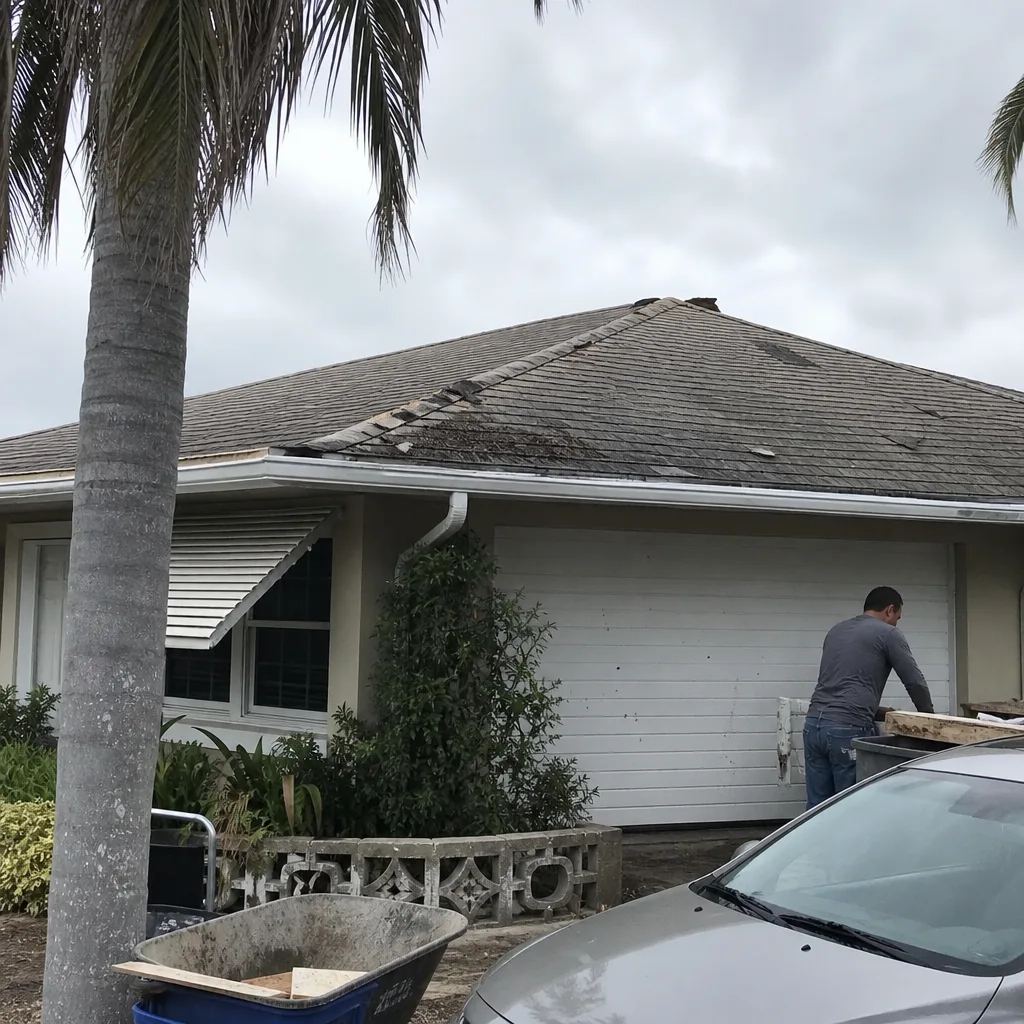 Before
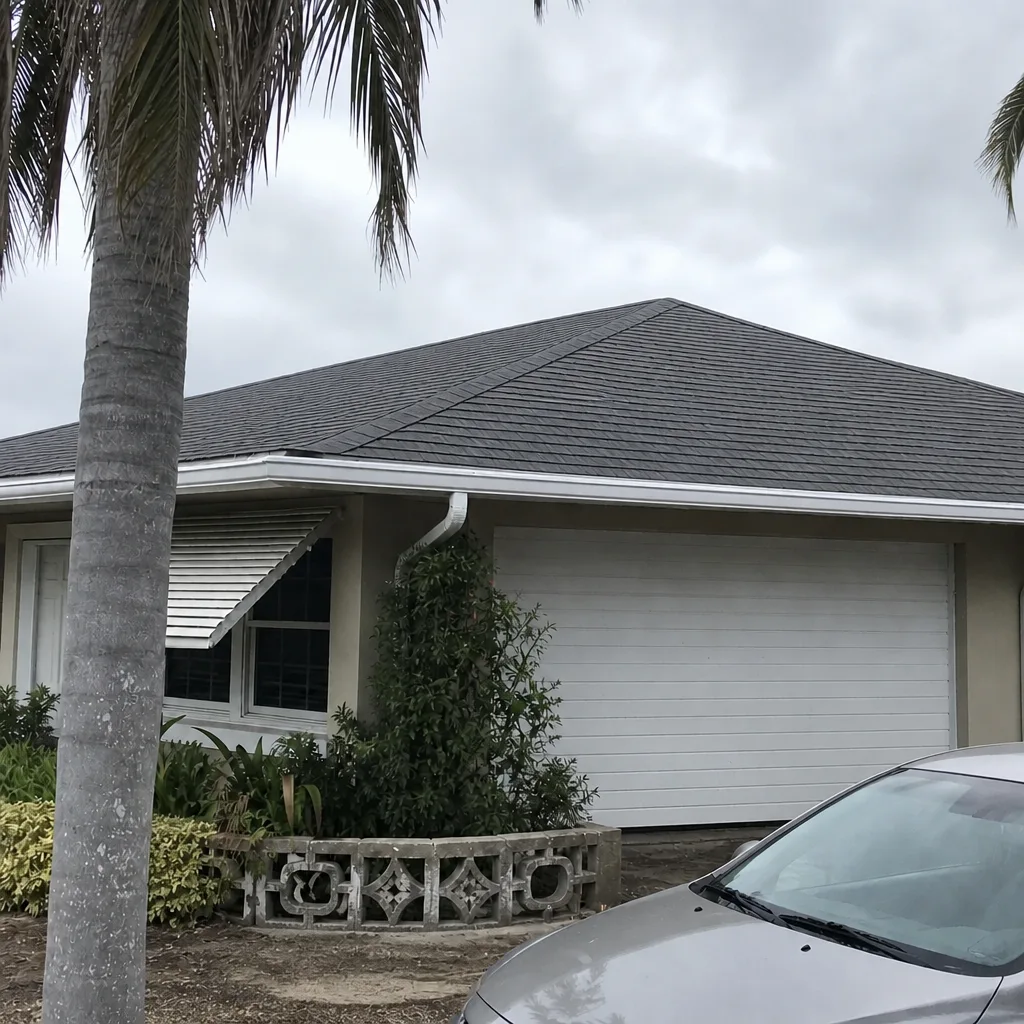 After
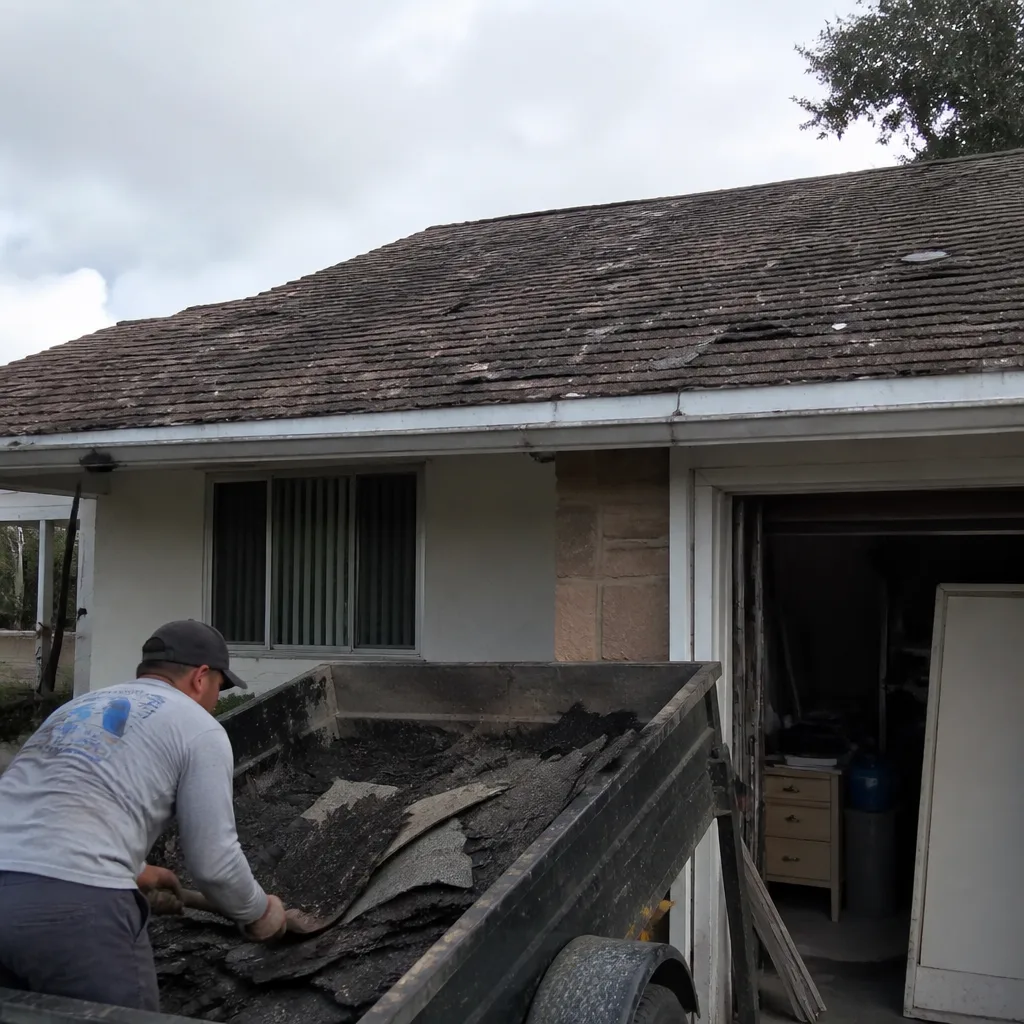 Before
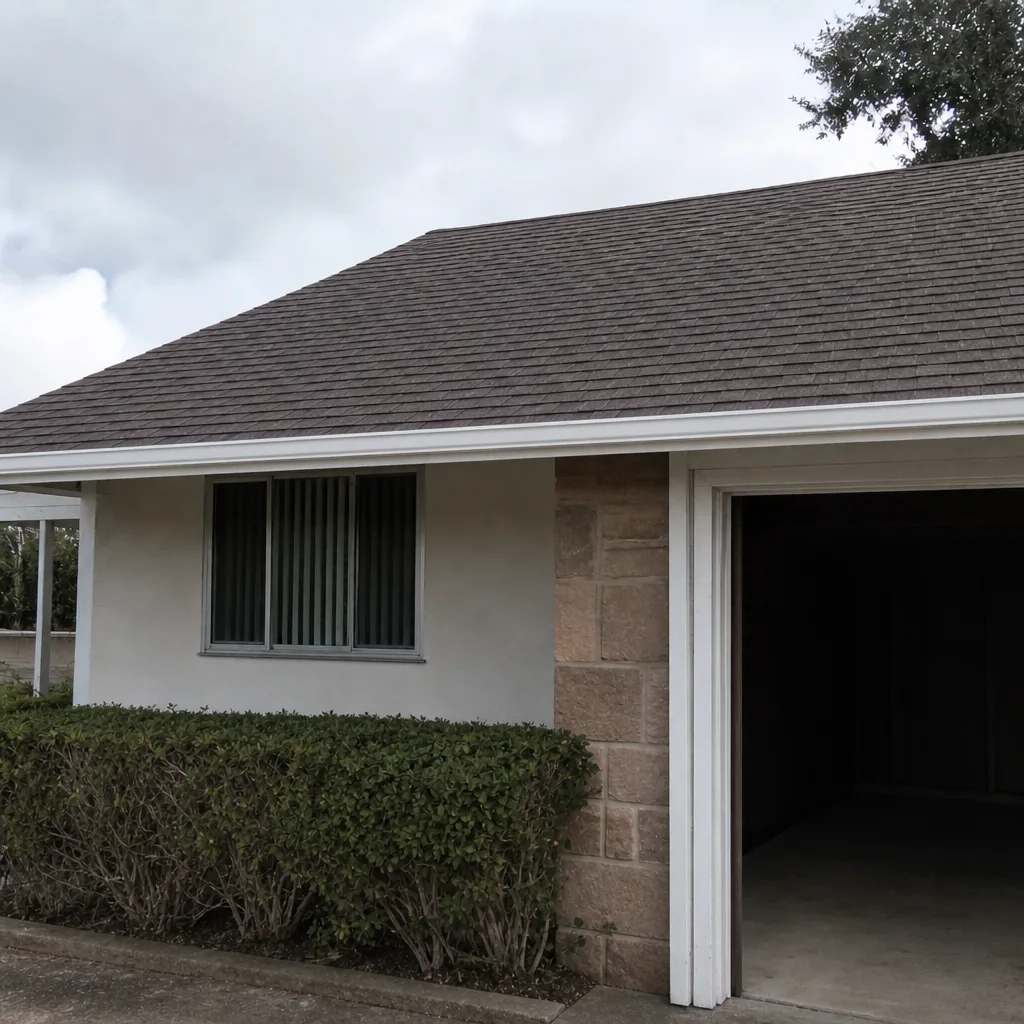 After
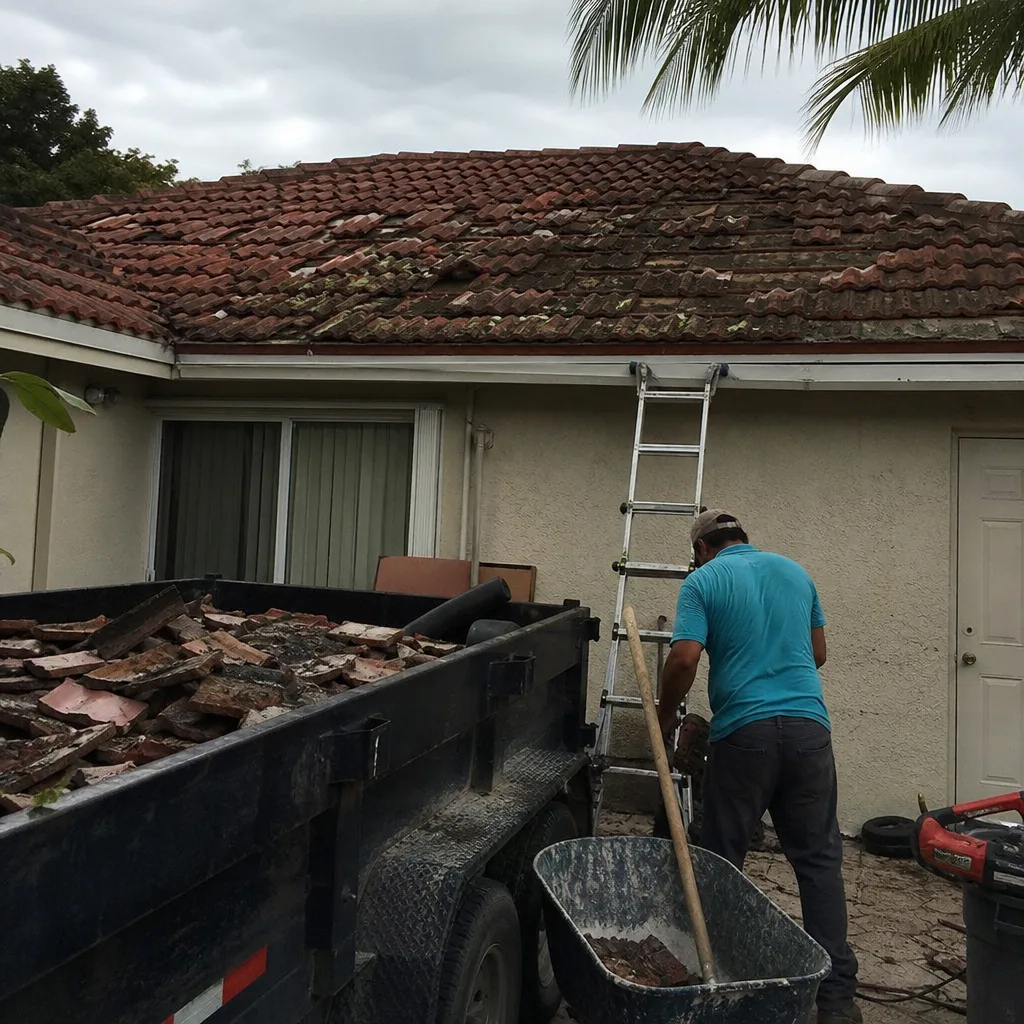 Before
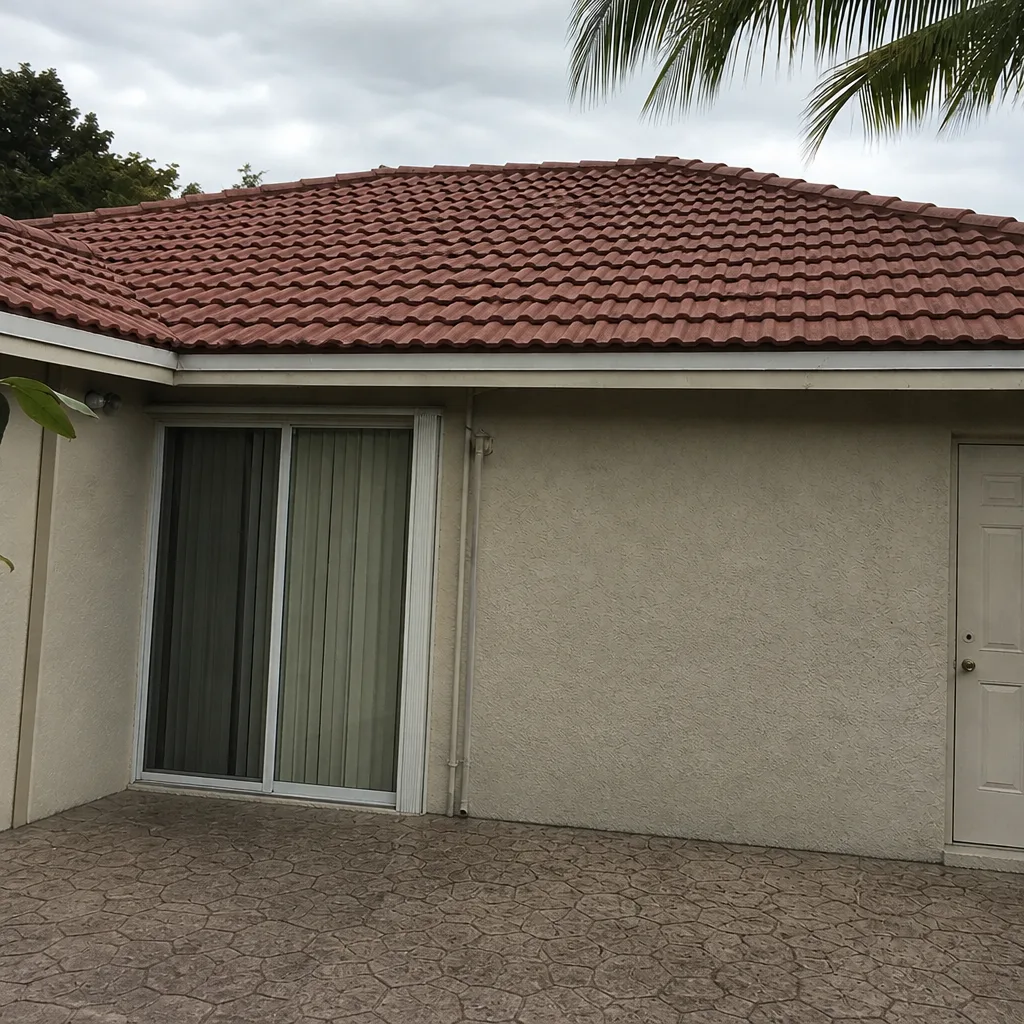 After
When to Call a Professional
There are scenarios where the DIY question isn’t close. If the roof is leaking in more than one place, if the damage involves the deck or structural members, if the home is more than one story or the pitch is steep, or if the repair would cover more than a small share of the roof covering, it’s time to call a licensed roofer. The same is true if you can’t find a clear answer on the permit classification from the building department, or if your insurance policy language is ambiguous about self-performed work. Those aren’t signs you’ve failed at research; they’re signs the project is in the zone where a professional carries the risk so you don’t have to.
Rutherford Roof Repair offers free estimates in Pompano Beach. Our technicians have up to 9 years of experience, and we’ll tell you plainly whether your repair is a legitimate DIY task or a job that belongs with us. Call (888) 361-4813. We answer 24/7. Fast dispatch from 7am to 7pm, Sunday through Friday.
Frequently Asked Questions
Yes, within limits. Florida’s owner-builder exemption allows a homeowner to perform work on a home they own and occupy, provided they sign the required disclosure and the work meets code. The exemption is narrow. It doesn’t cover projects that require an engineering sign-off or work outside the homeowner’s primary residence. Call (888) 361-4813 for an exact quote on any repair – estimates are free.
It may not. Most homeowner policies include language that limits or excludes coverage for work the homeowner performed themselves, particularly when it comes to “faulty workmanship” or “work performed by the insured.” The only way to know for sure is to ask your agent a specific question about your policy. If the answer is unclear, a licensed contractor’s work carries the paper trail an adjuster will want. Call (888) 361-4813 to discuss a documented repair.
Florida’s substantial improvement threshold treats projects that exceed a set percentage of a building’s value as substantial improvements, which can trigger a requirement to bring the entire structure up to current code. For roofs, the same principle can apply through local permitting rules on how much of the covering can be replaced before a project is classified as a re-roof. The threshold is set locally, so ask Pompano Beach’s building department how they’d classify your specific project. Call (888) 361-4813 if you’d rather have a professional walk the roof first.
Ask the building department, not a search engine. The classification depends on the share of the roof covering you’re replacing, the materials involved, and how the local code interprets the scope. A professional inspection is the fastest way to get a clear scope in writing, which you can then take to the permit desk. Call (888) 361-4813 to schedule a free inspection – you’ll have a factual basis for the conversation.
Never self-perform work that involves the roof deck, structural members, electrical connections for skylights or vents, or anything that requires a permit. Never self-perform on a steep or multi-story roof, and never attempt a repair you can’t safely reach. Those tasks carry fall risk, code exposure, and insurance consequences that outweigh any savings. Call (888) 361-4813 for a free estimate on the work that belongs with a licensed contractor.
The visible dollar figure is often higher on the contractor side, but the total cost includes permit fees, insurance risk, potential code-compliance upgrades, and the value of a workmanship warranty. Once a repair enters permit territory, those factors usually tip the comparison toward professional work. A written estimate lets you compare real numbers instead of guessed ones. Call (888) 361-4813 for a free estimate and see the full scope before you decide.
The Bottom Line
The DIY vs professional roofing decision in Pompano Beach isn’t primarily about skill. It’s about where the legal and insurance lines sit, and those lines are narrower than most guides admit. Small repairs like flashing re-seal, single shingle replacement, and gutter clearing are legitimately in DIY territory. Anything that disturbs the deck, covers a significant share of the roof, or requires a permit belongs with a licensed contractor. The hybrid approach, where you handle prep and cleanup while a licensed roofer carries the permit and inspection, gives you the best of both. If you’re unsure which side of the line you’re on, a professional Pompano Beach inspection is the cheaper first step, and an honest estimate is the second.
From a quick inspection to a full repair or replacement, Rutherford Roof Repair handles every stage of your roof’s life. We work with materials from brands like GAF, Tamko, and Boral, so the recommendation fits your roof rather than a single catalog. We repair first, and we only recommend replacement when it’s genuinely the right answer. Call (888) 361-4813 to schedule your free estimate. We answer 24/7. Fast dispatch from 7am to 7pm, Sunday through Friday; we’re closed Saturday, so a call that comes in on Saturday is booked into the next opening on Sunday.
Written by the team at Rutherford Roof Repair.