
Last updated November 15, 2026
 Architectural shingles
 Metal roofing
 Tile roofing
 GAF
 Owens Corning
 Flat & low-slope
Free roof inspection with deck photos before we talk money - GAF and Owens Corning certified installation
Roof Repair Troubleshooting in Pompano Beach: Common Problems and How to Fix Them
The wet spot on your ceiling is almost never directly below where the roof is leaking. In the low-slope and flat roof sections common across Pompano Beach, water can travel six feet or more horizontally along a deck or truss before it finally finds a way through your drywall. That single fact changes how you diagnose a roof problem. If you stare at the stain and assume the hole is right above it, you’ll chase the wrong spot, patch the wrong area, and watch the leak come back after the next storm. This guide walks you through the failures we see most often in Pompano Beach, how to trace a leak back to its real entry point, and which problems need attention now versus which can wait for a scheduled repair.
Quick Answer
Most roof leaks in Pompano Beach come from five sources: failed flashing at walls, valleys, and penetrations; popped or backed-out nails; deteriorated ridge caps; ponding water on low-slope sections; and moisture trapped at the soffit and fascia. The fix depends entirely on tracing the water backward from the interior stain to the actual entry point, and that diagnosis is what separates a repair from a replacement pitch. A trained roofer can usually pin down the cause during an inspection before any money changes hands.
Styles & brands we work with
- Architectural shingles
- Metal roofing
- Tile roofing
- GAF
- Owens Corning
- Flat & low-slope
Table of Contents
- The Five Most Common Roof Failures in Pompano Beach
- How to Trace a Leak Backward From the Ceiling Stain
- Emergency Repairs vs. Cosmetic Damage: How to Tell the Difference
- Diagnostic Questions to Ask Before Any Contractor Visit
- Safe DIY Temporary Fixes (and Two That Make Things Worse)
- Ponding Water on Low-Slope Roofs: What Actually Fixes It
- What a Roof Inspection Should Cover
The Five Most Common Roof Failures in Pompano Beach
Pompano Beach sits in a hot, humid, storm-prone part of South Florida, and the roof failures here follow that pattern. Intense sun bakes shingles and sealants year-round, summer thunderstorms push water sideways against flashing, and the heat and humidity never let a roof fully dry out between rains. Most of the homes we look at are built on concrete block – CBS construction – with low-slope or flat sections over part of the structure, and those sections behave very differently from the pitched areas. Here’s what we find most often.
- Flashing failure. Flashing is the metal or membrane that seals the joints where your roof meets a wall, chimney, skylight, or plumbing vent. In Pompano Beach, the sealant behind that flashing dries out and cracks in the sun faster than the flashing itself fails. Water gets behind it during a driving rain and shows up inside days later.
- Nail pops. Nails work loose as the deck and shingles expand and contract through the heat cycles. A backed-out nail lifts the shingle above it, opening a small gap that water exploits. These often look trivial from the ground but are a genuine leak path.
- Ridge cap deterioration. The ridge cap runs along the peak and takes the most direct sun. It cracks, curls, and loses granules first, and once it fails, water runs straight down the slope underneath the field shingles.
- Ponding on low-slope sections. Flat and low-slope roofs depend on proper drainage. When the slope is too shallow or a drain or scupper clogs, water sits for days after a storm, working its way into seams and around penetrations.
- Soffit and fascia moisture. The soffit vents under your eaves let the roof assembly breathe. When they’re blocked or the fascia behind them rots, moisture gets trapped, and you’ll see staining on the soffit or peeling paint along the fascia before you ever see a ceiling stain.
Each of these is a targeted repair in most cases. None of them automatically means the whole roof has to come off.
How to Trace a Leak Backward From the Ceiling Stain
Tracing a leak in a CBS home is a process of elimination, and the concrete block walls change the rules. Water that enters at the roof doesn’t always travel through the attic and drip straight down. On low-slope sections it can run along the deck, follow a truss or furring strip, and reappear well away from the entry point. In CBS construction, the block itself can wick moisture, so a stain near an exterior wall isn’t proof the wall is leaking – it may be water that entered at the roof and traveled along the top of the block. Work through these steps in order.
- Note the stain’s position and shape. A round, spreading stain that grows after rain usually points to an active roof leak. A streak running down a wall or along a ceiling joint often means water is traveling laterally before it drops.
- Look uphill and toward the nearest roof feature. Trace from the stain toward the closest wall intersection, valley, vent, skylight, or ridge. Water enters at transitions far more often than in the middle of a clean field of shingles.
- Get into the attic if you can do it safely. Look for water tracks on the underside of the deck, staining on trusses, or daylight at penetrations. Follow the staining uphill – it always leads toward the entry point.
- Check the exterior at the suspected area. Look for lifted shingles, cracked flashing sealant, backed-out nails, or gaps at the ridge. Note anything that looks off, and photograph it from a safe vantage point.
- Match the timing to the weather. A stain that grows only during wind-driven rain points to flashing or a vertical surface. A stain that appears after any rain, even a light one, points to a direct hole in the field.
This backward trace is the heart of good troubleshooting. When you can describe the stain’s location, when it appears, and what you found nearby, you’ve already done most of the diagnostic work.
Emergency Repairs vs. Cosmetic Damage: How to Tell the Difference
Not every roof problem is an emergency, and treating cosmetic issues like crises is how homeowners end up overpaying. In Pompano Beach, the line between “call now” and “schedule a repair” usually comes down to whether water is actively getting into the structure. Here’s how we sort it.
Genuine emergencies – the kind that justify fast action – include:
- Water actively dripping into a living space or pooling on a ceiling.
- A visible hole or missing section of roofing after a storm, with open deck exposed.
- Water reaching electrical fixtures, switches, or the panel area.
- Ponding water that isn’t draining after a storm and is rising near a seam or penetration.
- A sagging section of roof deck, which can signal soaked structural material.
Cosmetic or scheduleable problems include:
- Granule loss or fading on shingles with no interior staining.
- Peeling paint on the fascia with no moisture behind it.
- An old, dried water stain that hasn’t grown since a past storm.
- Minor shingle lifting or curling that hasn’t produced a leak yet.
Planned work like a replacement or a larger repair isn’t something anyone should promise same-day – that’s not how a real roofing job runs. But when water is actively coming in, you want to talk to someone who can help you stop the damage and set up the real repair. Call roof repair help early rather than waiting for a small leak to soak a deck and turn into a bigger job. We answer 24/7, with fast dispatch from 7am to 7pm, Sunday through Friday.
Diagnostic Questions to Ask Before Any Contractor Visit
The questions you ask before anyone climbs a ladder separate a repair-focused roofer from a replacement-first one. A contractor who sells replacements by default will look at any roof over a certain age and see a full tear-off. A repair-first roofer will diagnose the actual failure and tell you what a targeted fix involves. In our experience in Pompano Beach, the right questions get you a straighter answer before a single dollar is discussed.
- “What’s the actual cause of the leak?” You want a specific answer – failed flashing here, popped nails there – not a general statement that the roof is worn out.
- “Can this be repaired, and what would that repair involve?” A repair-first roofer will tell you what a fix looks like before ever mentioning replacement.
- “If it can be repaired, how much longer will the repair buy me?” A good answer explains how a repair lets you plan a replacement on your own timeline rather than an emergency one.
- “Why would replacement be the right call here?” If replacement comes up, ask for the reason. Widespread failure across the whole roof is a reason. A single leak isn’t.
- “What material options do you work with?” A roofer tied to one brand will push that brand. A company with broad access will match the material to your situation.
- “Will I get a written estimate that explains the work?” You want the line items in writing, not a number on a handshake.
When you get answers that start with the leak and the repair, you’re talking to the right kind of roofer. When the first response is “you need a new roof,” ask the second question again and see how the answer holds up.
Safe DIY Temporary Fixes (and Two That Make Things Worse)
There’s a right way to buy yourself time before a professional inspection and a wrong way that costs you more later. A temporary fix is meant to stop active water from doing more damage – not to solve the problem. In Pompano Beach, where a fast-moving storm can dump rain in minutes, a sensible temporary patch can protect your ceiling and deck until the real repair happens. Our technicians have up to 9 years of experience, and the safe fixes below are the ones we’d tell a neighbor to try.
Safe temporary measures:
- Place a bucket or towel under an active drip to protect the floor and contain the water, and move furniture and electronics out of the way.
- Photograph the stain and any exterior damage you can see from the ground so the roofer has a clear record of what you observed.
- Clear leaves and debris from a flat-roof drain or scupper so ponding water can drain.
- If you have a small, clearly visible hole in a shingle and can reach it safely from a ladder on firm ground, a temporary tarp or a roofing-approved sealant patch can slow the water. Never get on a wet, steep, or high roof to do this – the fall risk is far more serious than the leak.
Two fixes that make things worse:
- Sealing over the wrong spot. If you patch the area directly above a stain without tracing the leak first, you cover the water path and seal moisture into the deck. That trapped water can rot wood and complicate the real repair, which often means a bigger and more expensive job than the original leak.
- Spreading sealant across a wide area. Smearing roofing cement or a thick patch over a large section hides the real failure from the roofer who needs to see it. It also makes the eventual repair harder to do cleanly, so what was a small flashing fix turns into a bigger one.
Ponding Water on Low-Slope Roofs: What Actually Fixes It
Ponding is the failure that quietly does the most damage in Pompano Beach. A flat or low-slope roof is designed to shed water, and when it doesn’t, every seam and penetration sits under standing water for hours or days after a storm. The sun then heats that water and bakes the roof, and the cycle repeats. Over time, seams open, the membrane or coating breaks down, and water finds its way into the deck. Ponding has three common causes: too little slope in the original design, clogged drains or scuppers, and settlement or deflection in the structure that creates a low spot.
Here’s how ponding gets addressed:
- Clear the drainage first. Many ponding problems are maintenance issues – debris, leaves, or a blocked scupper that keeps water from escaping. Clearing drainage is the cheapest fix and often the whole fix.
- Check for recurring low spots. If water pools in the same place after every storm, the problem is the slope, not the drain. That calls for a roofer to assess whether the area can be re-sloped, patched, or recoated.
- Inspect seams and penetrations where the water sits. Standing water stresses the exact places that leak. A repair that reseals those spots buys time and prevents interior damage while you plan any larger work.
- Watch it during storm season. Ponding that appears briefly and drains is far less serious than standing water that lingers. Note how long it takes to clear.
When replacement genuinely is the right answer on a low-slope section, material choice matters. We work with a range of manufacturers – Owens Corning, IKO, Atlas and Tamko among them – so the recommendation fits your roof, not a single brand.
What a Roof Inspection Should Cover
An inspection is an honest diagnostic step, not a sales visit. The goal is to find the actual cause of the problem and tell you what it needs, whether that’s a small repair, a larger repair, or a genuine replacement. In Pompano Beach, a thorough inspection looks at more than the shingles because the failures here often start at the edges and transitions. Here’s what a good inspection covers.
- The roof field. Shingle condition, granule loss, curled or lifted shingles, and backed-out nails across the slopes.
- Flashing and penetrations. Every wall intersection, valley, vent, skylight, and chimney, with close attention to whether the sealant behind the flashing has cracked.
- Ridge and hip details. Cap condition along the peaks, where sun exposure is highest.
- Low-slope sections. Drainage, ponding history, seams, membrane or coating condition, and penetrations under standing water.
- Soffit and fascia. Venting, moisture staining, and any rot along the eaves.
- Attic. Water tracks on the deck underside, staining on trusses, and whether moisture is being trapped by poor venting.
A repair-first roofer gives you the findings, the probable cause, and options – a repair now, a plan for later, or replacement if the evidence truly supports it. Our inspection starts that conversation with no commitment on your side. When a full replacement does turn out to be the right answer, we handle it under one roof, from roof replacement material selection to the finished job.
Common Mistakes to Avoid
- Assuming the leak is directly above the stain. In Pompano Beach’s low-slope sections, water runs sideways before it shows up inside. Chasing the stain instead of tracing it uphill sends you to the wrong spot.
- Accepting a replacement pitch without a diagnosis. If a roofer tells you the whole roof needs to come off before identifying the actual failure, ask for the cause. A single leak is not a reason for a tear-off.
- Triggering a replacement prematurely with a wide sealant patch. A big smear of sealant hides the failure and can trap water in the deck, so the repair that follows is harder and costs more than it would have.
- Ignoring soffit and fascia moisture. Staining under the eaves or peeling paint along the fascia is often the first sign of a venting or roof-edge problem. Wait long enough and the rot reaches the structure.
- Letting water pond without checking drainage. A blocked drain or scupper in Pompano Beach can turn a minor low-slope issue into a recurring leak after every summer storm.
- Choosing a roofer locked to one brand. A single-brand contractor recommends the brand they carry, not necessarily the material your roof and budget need. Broad manufacturer access keeps the recommendation honest.
- Getting on the roof during or right after rain. A wet roof is dangerous, and a fall is far worse than a stain. Inspect from the ground and let a professional do the climbing.
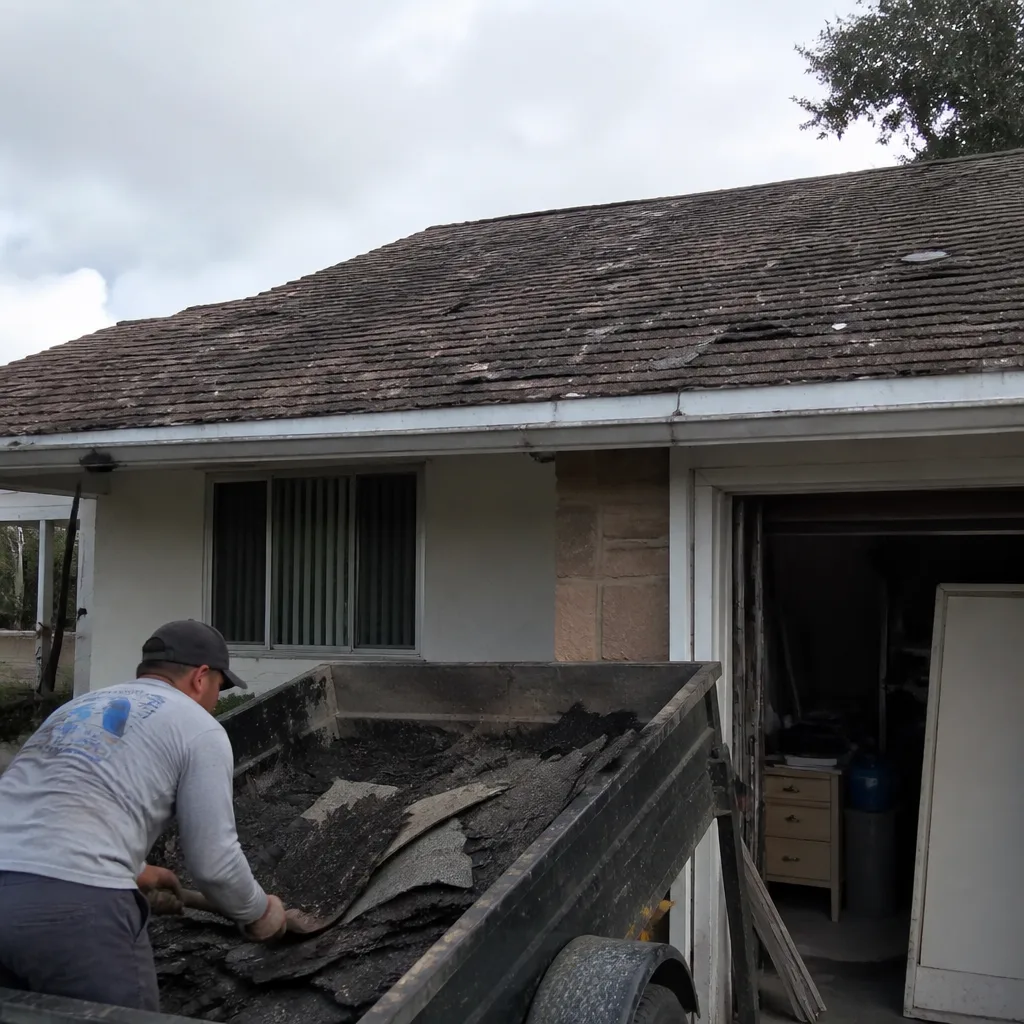
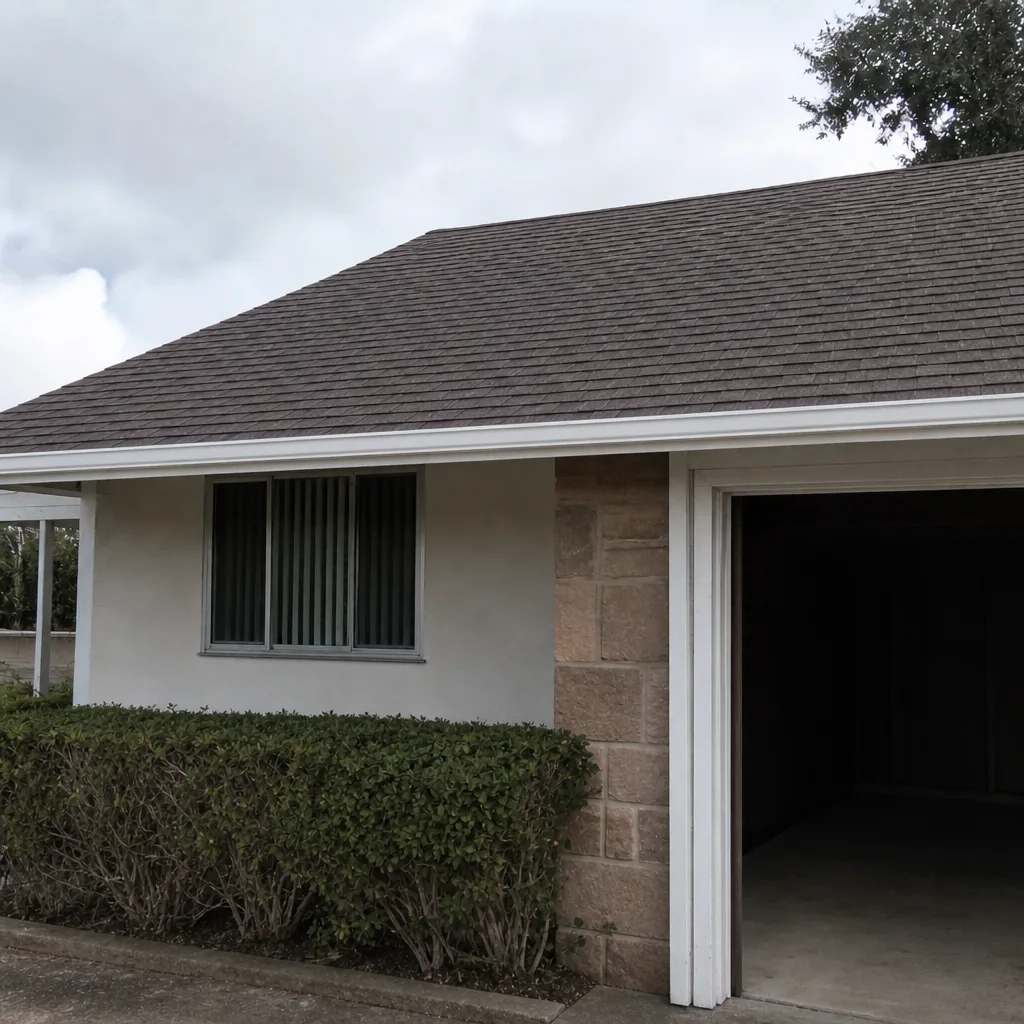
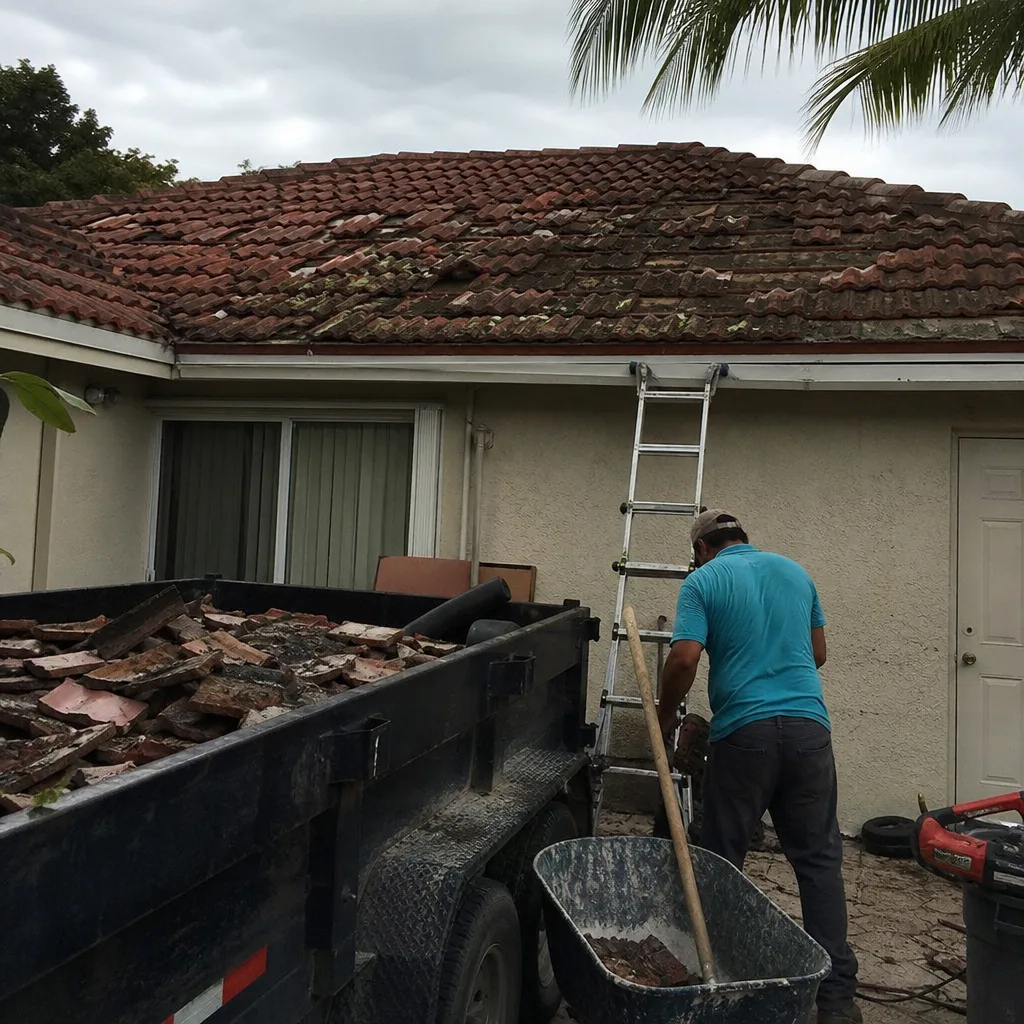
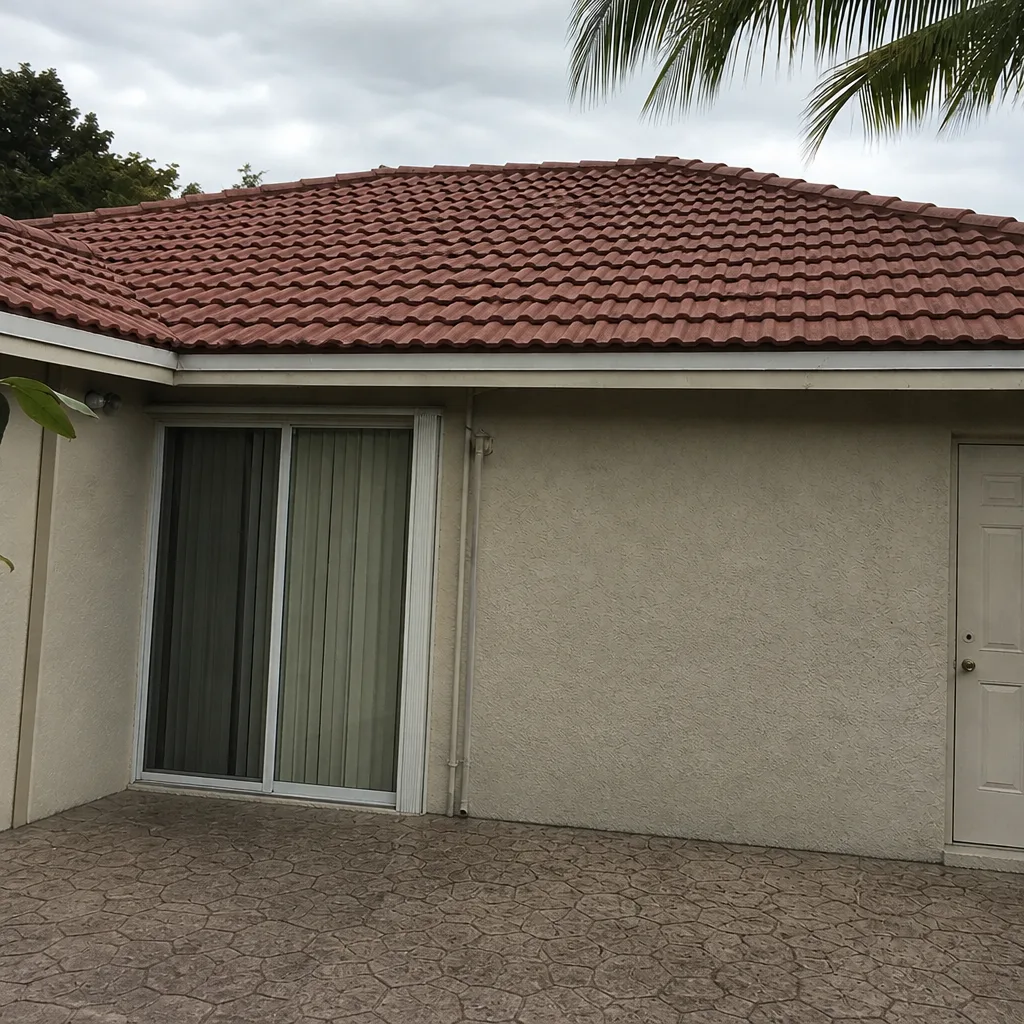
See the difference
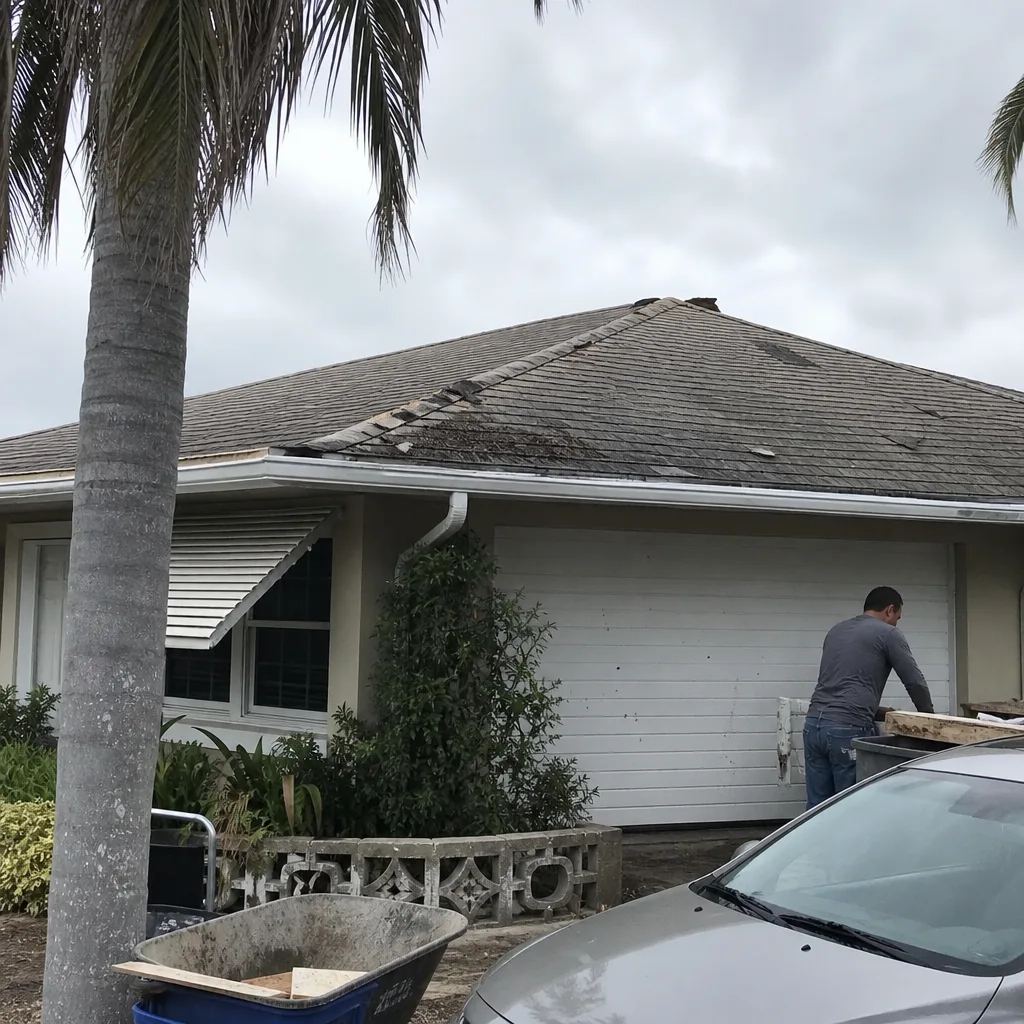 Before
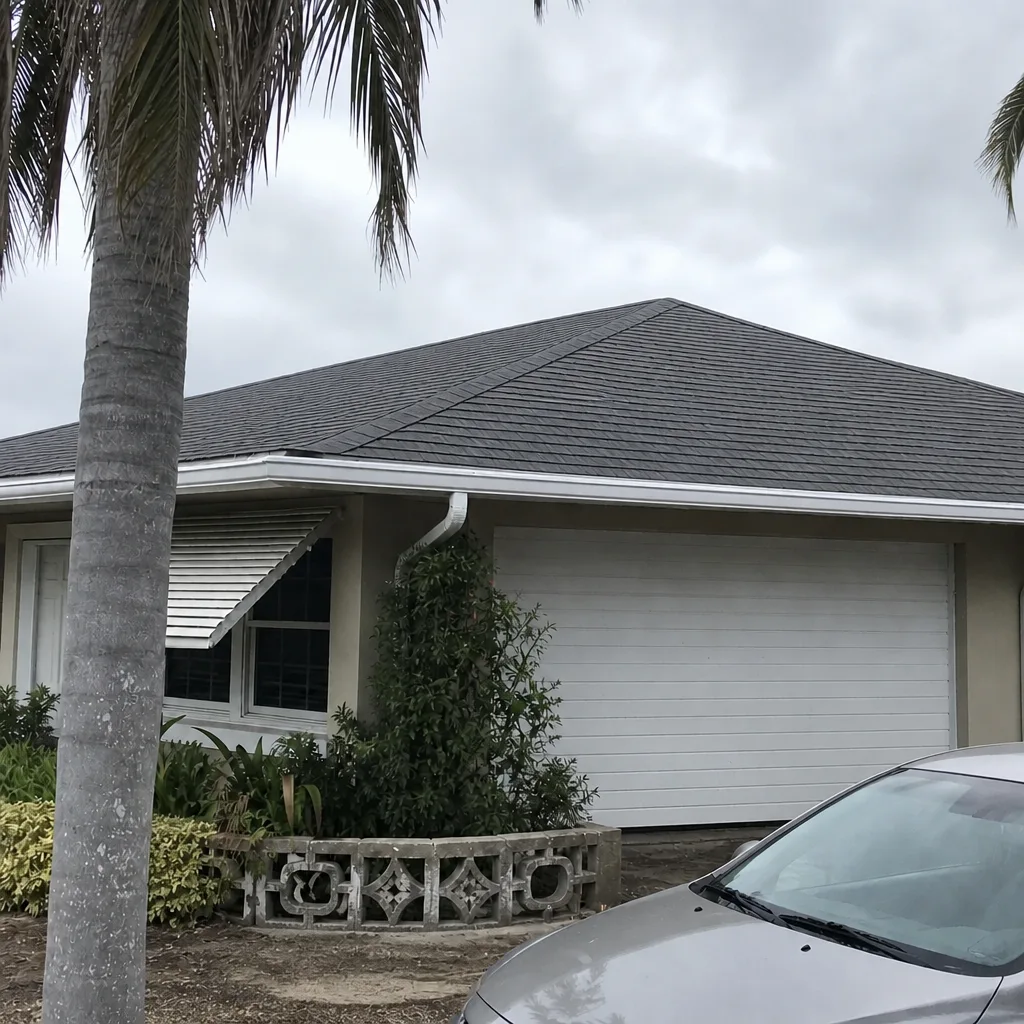 After
 Before
 After
 Before
 After
When to Call a Professional
Call a professional when water is actively getting in, when you can’t trace the source from the ground or the attic, when ponding water isn’t draining after a storm, or when you’ve got a possible structural sag. Those situations need trained eyes and quick action to limit damage. Cosmetic issues can wait for a scheduled visit, but a leak that’s been running quietly for weeks can soak a deck and turn a small repair into a large one. If you’re unsure which category your problem falls into, describe the symptom on the phone. We answer 24/7, with fast dispatch from 7am to 7pm, Sunday through Friday. Rutherford Roof Repair offers free estimates in Pompano Beach – call (888) 361-4813. Our inspection gives you an honest read on what the roof needs before any work is discussed.
Frequently Asked Questions
Water in a low-slope or flat roof often travels horizontally along the deck or a truss before it finds a way through the ceiling. In Pompano Beach, that sideways travel can be six feet or more, so the stain marks where water dropped, not where it entered.
Failed flashing at walls and penetrations is the most common, followed by popped nails, deteriorated ridge caps, ponding on low-slope sections, and soffit-related moisture. Each is usually a targeted repair rather than a full replacement. Call (888) 361-4813 for a free estimate on any of them.
A small, clearly reachable hole can be temporarily patched to slow water, but patching the wrong spot – or smearing sealant over a wide area – can trap moisture and make the permanent repair harder. Never get on a wet or steep roof. Call (888) 361-4813 for an exact diagnosis; estimates are free.
Active water entering a living space, an open hole after a storm, water near electrical fixtures, or rising ponding water that won’t drain are genuine emergencies. A dried stain that hasn’t grown, granule loss, or fascia paint peeling without moisture are scheduleable. Call (888) 361-4813 and describe what you see.
A repair-first roofer diagnoses the cause and offers a targeted fix first, recommending replacement only when the evidence genuinely supports it. Ask what the actual cause is and whether a repair will work. Call (888) 361-4813 for a free inspection before you decide.
There’s no single price because it depends on the failure and the material, so we set it per job with a written, line-item estimate before any work begins. The written estimate is the price. Call (888) 361-4813 to schedule a free estimate.
The Bottom Line
Most roof problems in Pompano Beach are repairs waiting for an accurate diagnosis, not replacements waiting for a signature. Trace the leak backward from the stain, match the symptom to the likely cause, and know which problems are genuine emergencies versus cosmetic damage. Ask the right questions before anyone shows up, and skip the temporary fixes that hide the real failure. A repair-first roofer will diagnose the cause, tell you what a targeted fix involves, and only recommend replacement when the evidence truly calls for it. Rutherford Roof Repair exists to fix first, and to handle every stage of your roof’s life when you need it. Call (888) 361-4813 to schedule your free estimate. We answer 24/7, with fast dispatch from 7am to 7pm, Sunday through Friday.
Written by the team at Rutherford Roof Repair.