
Last updated November 15, 2026
 Metal roofing
 Architectural shingles
 Tile roofing
 GAF
 Owens Corning
 Flat & low-slope
Free roof inspection with deck photos before we talk money - GAF and Owens Corning certified installation
Roofing Emergency Preparedness Guide for Pompano Beach Homes
Most roof damage that turns into a denied insurance claim doesn’t come from the wind that hits your shingles. It comes from the water that gets in afterward, while you’re waiting for someone to show up with a tarp. The expensive part is rarely the missing shingle or the cracked tile. It’s the water that soaked the decking and the ceiling while a homeowner stood in line behind forty other people trying to find a roofer after a storm was named. In this guide, we’ll walk you through the 72-hour window before landfall, the documentation that makes or breaks a claim, the materials worth having on hand in Pompano Beach, and the parts of emergency prep you can skip because they don’t change the outcome.
Quick Answer
Roofing emergency preparedness in Pompano Beach means having a documented pre-storm condition record, an emergency supply kit with the right tarp and fasteners, and a plan for who legally performs emergency tarping in Broward County, all in place before a storm is named. The decisions that limit water damage and protect your claim happen in the 72 hours before landfall, not in the cleanup after. Being ready is about paperwork and materials on hand, not heroics during the storm.
Styles & brands we work with
- Architectural shingles
- Metal roofing
- Tile roofing
- GAF
- Owens Corning
- Flat & low-slope
Table of Contents
- Why Pre-Storm Preparation Beats Post-Storm Cleanup
- How to Document Your Roof Before Storm Season
- The Pompano Beach Roof Emergency Supply Kit
- The 72-Hour Pre-Storm Checklist
- What Emergency Tarping Actually Requires in Broward County
- How to File a Roof Damage Claim Correctly From Day One
- How Pompano Beach Storm Season Shapes Roof Maintenance
- After the Storm: What to Do in the First 24 Hours
Why Pre-Storm Preparation Beats Post-Storm Cleanup
The roofing industry talks about storm readiness as though it starts when the wind picks up. In our experience, the decisions that determine whether a home sustains ten thousand dollars of water damage or a few hundred dollars of repaired shingles are made in the quiet weeks before hurricane season begins. Once a storm is named, the bottlenecks stack up fast: roofers get booked solid, material yards run short on tarps and fasteners, and anyone with a truck is suddenly offering “storm specials.”
Homes in Pompano Beach sit in a climate that gets tested every year from June through November. The forecasters at the National Hurricane Center track storms for days, which gives every homeowner a window. What matters is what you do with it.
The three things that change outcomes are:
- A documented condition record. Photos, an inspection report, and material details that make your pre-storm roof provable.
- Materials on hand. A tarp of the right thickness, the right fasteners, and a way to secure it without causing damage yourself.
- A plan for who does the work. A known, licensed contractor who can legally tarp in Broward County, and a clear understanding of what you can and can’t do yourself.
None of those are dramatic. None of them involve boarding windows at the last minute. But each of them is what separates a claim that pays from one that gets denied, and a roof that needs a repair from a roof that needs a replacement. If you want an honest starting point before the season starts, a roof inspection is the low-commitment first step to find out what your roof actually needs.
How to Document Your Roof Before Storm Season
A photo of your roof taken on your phone from the driveway is worth almost nothing to an adjuster. What holds up is a condition record an insurance company can’t wave away as an after-the-fact attempt to inflate a claim. That means GPS-tagged photos, wide shots of every roof plane, close shots of every flashing detail, and an inspection report authored by a roofer who knows what to look for.
Here’s how to build a record that will hold weight when it matters:
- Take dated, GPS-tagged photos of every roof plane. Most phone cameras will stamp the location and date if location services are on. Photograph all four sides of a gable roof and every slope of a hip roof.
- Photograph every flashing point. Chimney, vents, ridge, valleys, and any penetrations. These are the first places water gets in after a storm, and adjusters want to know their starting condition.
- Capture the roof edges from ground level. Fascia, soffit, drip edge, and gutter attachment, all photographed in sequence so the camera location is obvious.
- Get a professional inspection report on file. Our Rutherford Roof Repair team provides inspection as a diagnostic step, not a sales pitch. Roofers document the roof, note existing shingle or tile conditions, and flag existing minor damage or aging so it can’t later be misattributed to a storm.
- Keep the material information. If your roof was installed with Owens Corning or Atlas shingles, keep the manufacturer and product name. It helps match replacement and helps your claim.
- Note interior ceiling and wall condition. A photo of a clean ceiling today makes a future water stain provable as new damage.
- Back everything up off your phone. Cloud storage and a printed copy in a waterproof bag. Phones break in storms, and so do chargers.
Do this in Pompano Beach before June, not the week a storm turns toward Florida. The record is only as good as the day it was taken, and the day it was taken needs to be well before the storm existed. When you want a roofer’s eyes on that record, we’re glad to inspect and document without any obligation to book further work.
The Pompano Beach Roof Emergency Supply Kit
You’d be surprised how many homeowners get through a storm, come outside to find a section of shingles gone, and then realize they have nothing to cover it with. The local hardware stores sell out of tarps in the first hour after a named storm, and any roofer who answers the phone is going to ask what you have on hand. Building a kit in advance costs a few hundred dollars and takes up one shelf in the garage.
What the kit should contain:
- Heavy-duty poly tarps, at least 6 mil. Standard blue tarps sold at hardware stores are usually 4 to 6 mil. A 6 mil tarp holds up better under wind lift and lasts longer than the thinner options. Two or three sizes: a 20×30 for a large opening, a 10×12 for a single vent or flashing failure.
- Cap nails or roofing nails with plastic washers. These hold a tarp down without tearing the fabric the way a bare nail head does. Also called cap fasteners or button caps.
- Roofing screws or hurricane straps. For securing tarp edges to fascia or temporary framing.
- Weighted sandbags or rubber pavers. For the perimeter of the tarp so it doesn’t flap.
- A hammer, pry bar, utility knife, work gloves, and safety glasses.
- A battery-powered or hand-crank flashlight, and plastic sheeting for interior ceiling protection.
A word of caution: climbing on a roof after a storm to install a tarp is dangerous. Wet surfaces, hidden damage, and even a small fall from a one-story home can turn a damaged roof into a serious injury. In our experience, professional tarping protects the structure far more reliably than a homeowner tarping job, and it protects the homeowner from becoming the story. If you’re not comfortable on a ladder, the safest call is to book a licensed roofer as soon as the storm passes.
The 72-Hour Pre-Storm Checklist
The 72-hour window before a named storm makes landfall is when a real emergency plan pays off. Most homeowners spend this window doing things that don’t affect the roof’s outcome. Here’s what actually matters, split three ways: what a roofer should do, what a homeowner can do, and what isn’t worth the effort.
What a roofer should do in the 72-hour window
- Inspect for existing vulnerabilities. Lifted or missing shingles, cracked tile, tired flashing, or a sagging area that has been ignored. Fix these before the storm, because the storm will find them.
- Clear the roof of debris. Palm fronds, limbs, and the leaves that gather in valleys and behind chimney flashing become water dams.
- Secure or remove rooftop items. Solar panels, satellite dishes, HVAC covers, and anything attached to the roof that could become a projectile.
- Check gutters and downspouts. Clogged gutters cause water to back up under the eave and into the fascia, even in a moderate rain event.
- Confirm the roof is ready for tarping if needed. If a roofer has inspected and documented the roof, they know what materials and access they’ll need.
What a homeowner can do in the 72-hour window
- Walk the perimeter of the home and photograph the roof from each side, in dated and GPS-tagged shots.
- Clear gutters of visible debris, if it’s safe to do so from the ground with a gutter tool.
- Bring in or secure patio furniture, planters, and anything that could lift.
- Confirm your policy covers storm-related roof damage and know the deductible. Note the number to call to start a claim.
- Verify the emergency kit is intact: tarps, fasteners, flashlights, interior plastic sheeting.
What’s not worth doing
- Caulking or patching anything on a roof in high wind – it doesn’t hold and creates a fall hazard.
- Renting heavy equipment or buying specialty products at the last minute. The materials you own in your kit are what you’ll actually use.
- Frantically cutting limbs yourself. Tree work near the roofline is a professional job, and doing it wrong can turn a limb into a projectile into your roof.
The best-prepared Pompano Beach homeowners we work with have a written plan for each of these steps, taped inside the garage door, with the phone number of their roofer already on it.
What Emergency Tarping Actually Requires in Broward County
Emergency tarping sounds simple, and it isn’t. A tarp over a hole that isn’t fastened properly will lift in the next gust and expose everything you tried to cover. A tarp that’s fastened wrong will tear the shingles that are still in place and turn a small repair into a full replacement. A tarp installed by an unlicensed person can void your insurance coverage or leave you with no recourse when the work fails.
Here’s how emergency tarping actually works under Broward County’s post-storm rules:
- Licensed roofing contractors do the tarping. In Florida, roofing work, including emergency stabilization, is regulated at the state level, and a licensed roofing contractor is the right person for tarping on a residential property. Ask for the license number and verify it. Storm chasers offering same-day tarping after a storm often aren’t licensed to do the work they’re offering.
- Emergency licensing for out-of-state contractors is a real thing, but verify it. After a declared state of emergency, Florida sometimes allows out-of-state licensed contractors to perform emergency work under special provisions. Ask for the license and confirm the contractor is operating under the current emergency rules. If they can’t produce it, don’t let them on your roof.
- Tarping is temporary. It’s good for days or a few weeks, not for a season. A proper tarp install protects the property until a real repair can be scheduled.
- The homeowner can do limited tarping on their own home. Florida law allows homeowners to work on their own single-family residence without a license in many cases. That said, doing it safely after a storm is a different question from doing it legally. The safety risks are real. We recommend against it unless you have roofing experience and a second person on the ground.
- Document the tarp install. Photos of the tarp before, during, and after install, along with the contractor’s name and license, help when the insurance adjuster asks what stabilization was done.
If a storm is coming and you’re not sure if your roof will hold, the safest plan is to have the roof inspected before landfall so you know exactly where the vulnerabilities are. A tarp on a documented, inspected roof is far more defensible than a tarp on a roof nobody has looked at.
How to File a Roof Damage Claim Correctly From Day One
The claim denials that happen sixty days after a storm almost always trace back to the first twenty-four hours. Not the storm, not the adjuster, not the policy language. The homeowner, with the best intentions, took the wrong photos, tossed the wrong materials, or let an unlicensed person touch the roof before the adjuster could see it. Filing correctly from the first call protects you.
Here’s the sequence that keeps a claim strong:
- Document before you clean up. Take photos of every damaged area before anything is moved, repaired, or covered. Wide shots first, then close shots.
- Photograph water intrusion inside the home. Ceiling stains, wet drywall, water on the floor. Note the date and time.
- Keep the damaged materials. If a shingle is on the ground, or a piece of flashing was blown off, put it in a labeled bag. Adjusters want to see what failed.
- Call your insurance company before calling a contractor. Open the claim and get a claim number. Then call the roofer.
- Do not let an unlicensed contractor touch the roof before the adjuster inspects. This is the single biggest mistake we see. Even emergency tarping by an unlicensed person can muddy the claim.
- Get a professional inspection report with photos. The roofer’s report, cross-referenced to your own photos, is what convinces an adjuster that the damage is real and storm-caused.
- Keep every receipt. Tarps, tarp install, temporary repairs, hotel stays if you had to vacate, all reimbursable or claim-relevant.
If you’re not sure your roof has storm damage or just age-related wear, that’s a diagnosis question before it’s a claim question. Roof repair may be the right answer for a small issue, and a full replacement may be needed if the damage is broad. Getting an honest read before you file keeps the claim clean.
How Pompano Beach Storm Season Shapes Roof Maintenance
Pompano Beach roofs live in a climate that tests materials year-round. The summer sun is brutal on shingle granules, the rainy season brings intense afternoon thunderstorms through September, and the wind events stack on top of ordinary wear. A roof that would last decades in a mild climate ages faster here, and the smart maintenance schedule reflects that.
What that means for the calendar:
- Before June: full inspection, gutter cleaning, and any small repairs caught while the weather is dry. This is the time to document condition and get an inspection report on file.
- June through November: monitor after every significant rain event. Look for ceiling stains, granule loss in gutters, and shifted tiles or shingles.
- Before any named storm: run the 72-hour checklist, confirm the kit is stocked, and photograph the roof again.
- December through May: the dry stretch for larger repairs or replacements, when the weather cooperates and scheduling is easier.
When replacement does become the right call, having access to brands matters. Our roof replacement projects draw from a wide portfolio – Owens Corning, IKO, Atlas, Tamko, and several others – so we match the material to your home, budget, and preferred warranty tier instead of pushing the highest-margin line.
If you’re near the coastside neighborhoods of Pompano Beach, or inland near Pompano Beach Highlands, or up around Lighthouse Point, the inspection priorities differ slightly by tree cover and roof style, but the calendar stays the same. Get ahead of the season, not behind it.
After the Storm: What to Do in the First 24 Hours
The first twenty-four hours after a storm are when the documentation that protects your claim is created. Miss them, and you’re reconstructing from memory and gossip. Hit them, and everything that follows – adjuster visit, contractor estimate, repair authorization – moves faster and defends itself.
The order matters less than the coverage. Get all of these done on day one if you can:
- Photograph the roof from the ground, then from a drone or a safe vantage, before anything is moved.
- Photograph interior water intrusion with a date stamp.
- Bag any fallen materials.
- Call your insurer to open the claim.
- Call a licensed roofer to book an inspection and, if needed, emergency tarping.
- Do not walk on the roof yourself. Wet surfaces, hidden punctures, and any roof that lost material are fall hazards.
- Do a temporary interior fix with plastic sheeting to limit further damage. This is documented as a temporary step, not a repair.
We answer 24/7. Fast dispatch from 7am to 7pm, Sunday through Friday. If a call comes in on a Saturday, we book it into the next available slot on Sunday. Getting a roofer on the calendar early means the real repair happens faster once the storm passes, and the claim has a licensed professional behind it from the start.
Common Mistakes to Avoid
- Waiting until a storm is named to find a roofer. Roofers get booked solid within hours of a named storm. The homeowners who book inspections before June are the ones who get same-week repair slots when it matters.
- Letting a storm chaser tarp the roof without verifying a license. Unlicensed tarping can invalidate a claim and leave you with no recourse if the work fails. Ask for the license number and verify it.
- Photographing the roof only after the damage. An adjuster sees the damage; what they can’t see is what was there before. Without pre-storm photos, they can deny the claim on “pre-existing condition” grounds.
- Cleaning up before documenting. A pile of shingles in the yard is evidence until you move it. Photograph first, then clean.
- Assuming hail caused the damage. Hail is uncommon in Pompano Beach. What looks like impact damage is usually wind-lifted shingles, tile cracked from debris, or flashing failure. Attributing it to hail weakens your claim.
- Tarping the roof yourself without the right materials. A 4 mil tarp with a few bare nails won’t last a night. If you’re going to tarp, use a 6 mil tarp and cap fasteners, and only if you can do it safely.
- Skipping the inspection report. A roofer’s written inspection is the single most durable piece of documentation in a future claim. It’s worth getting even when nothing is wrong today.
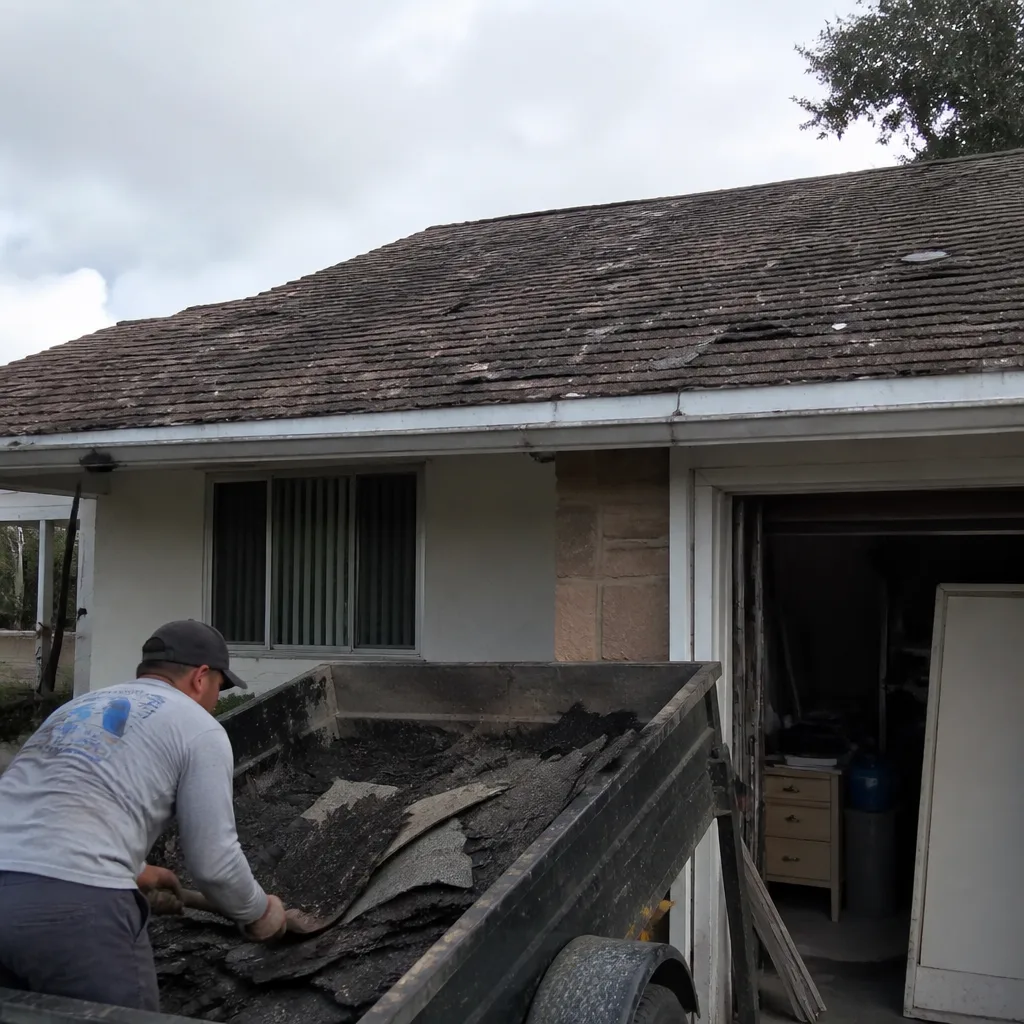
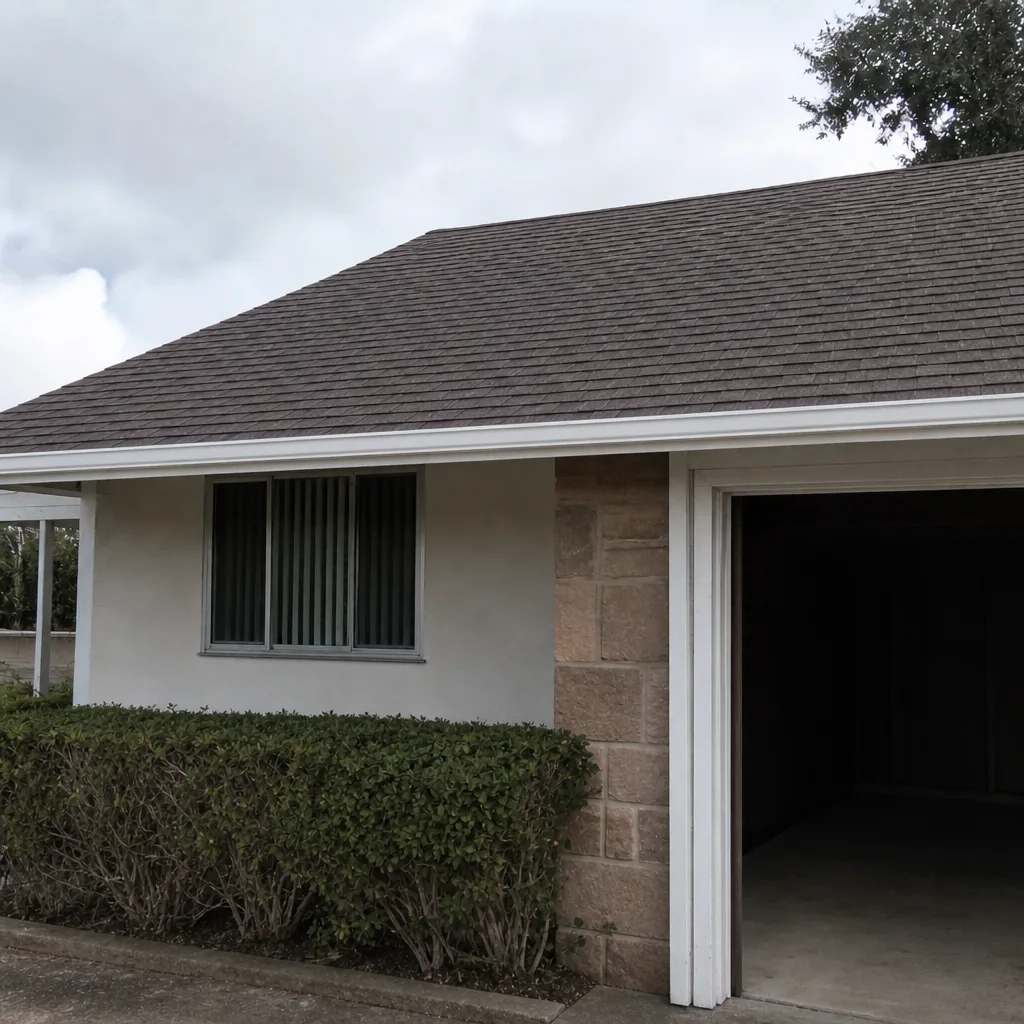
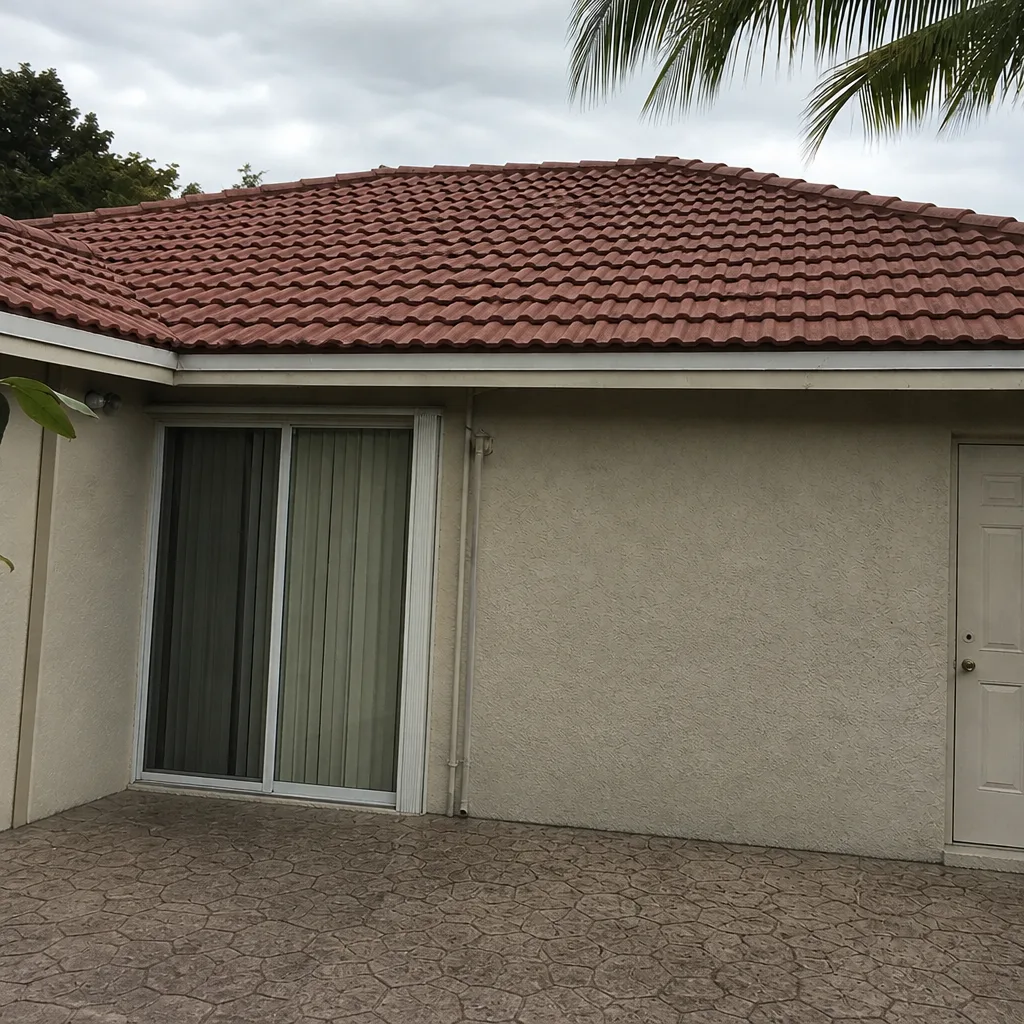
See the difference
 Before
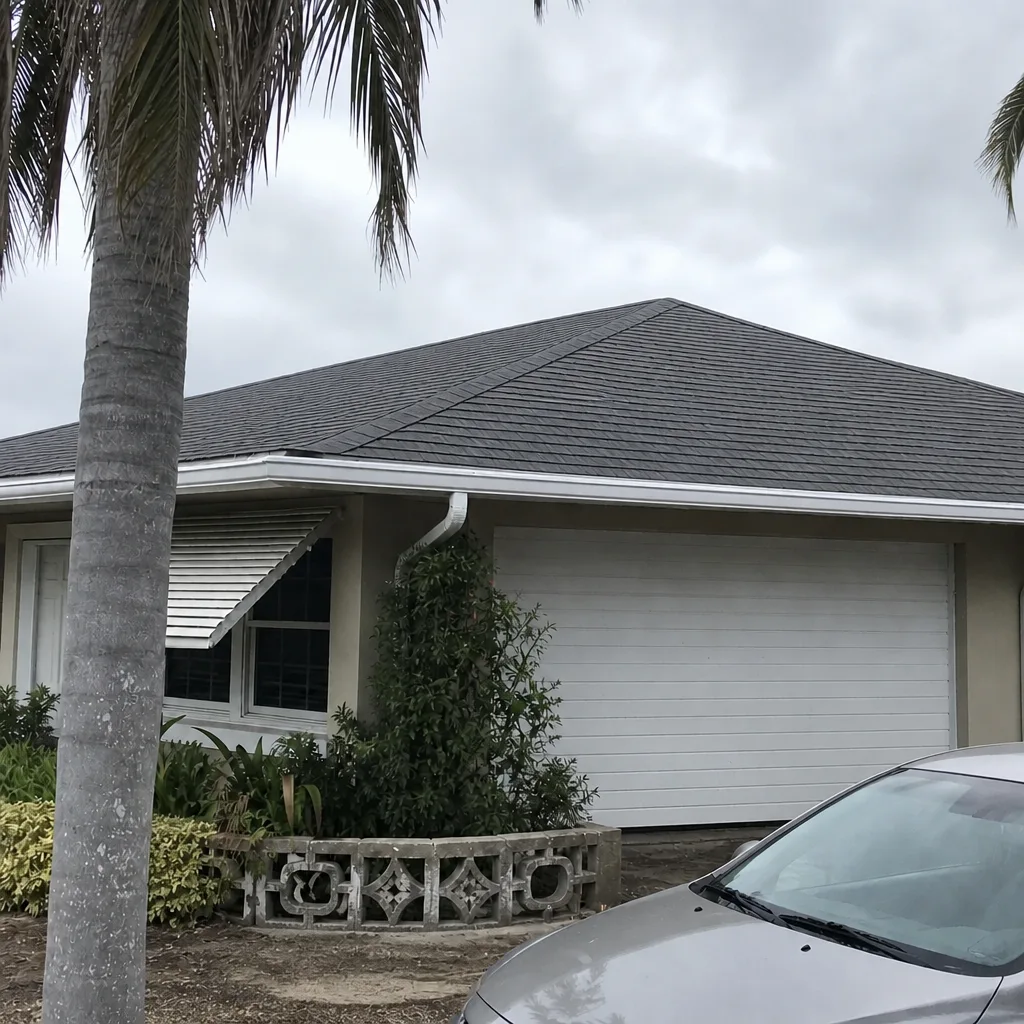 After
 Before
 After
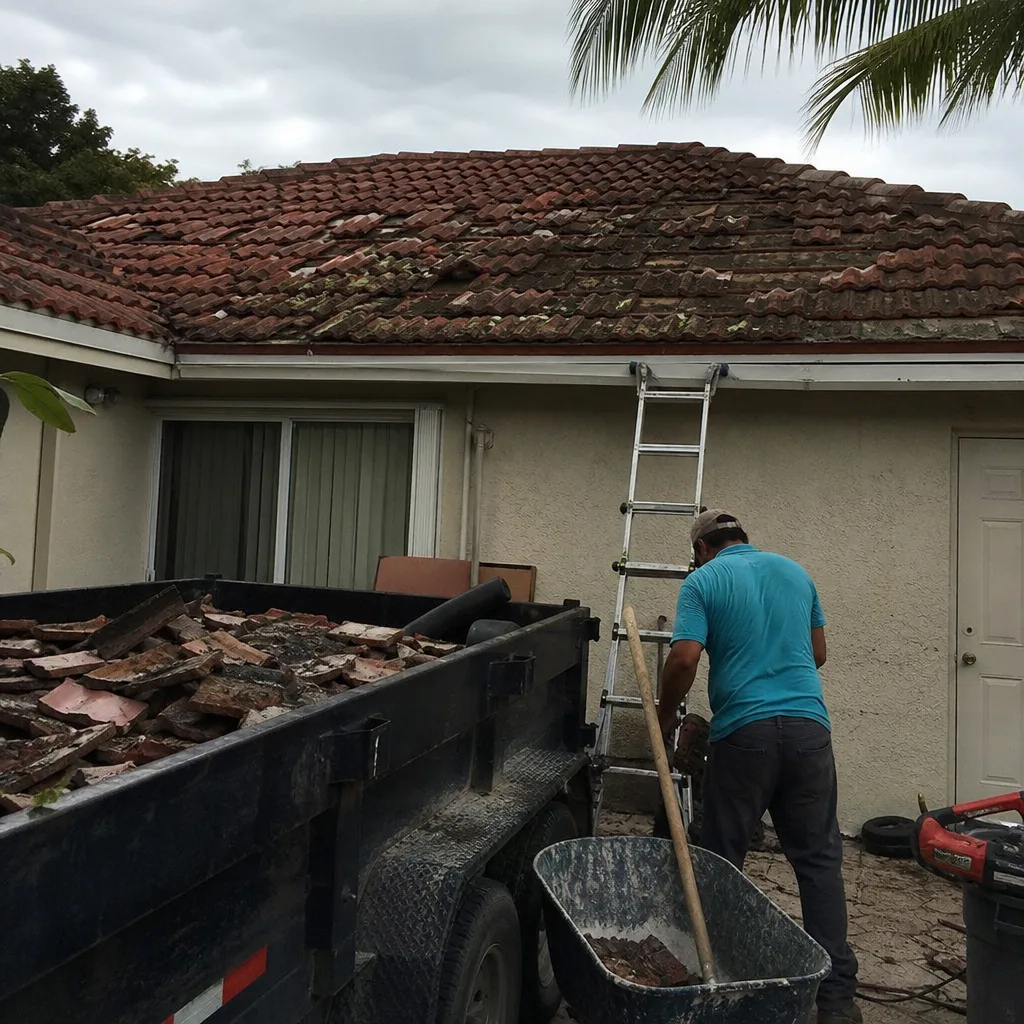 Before
 After
When to Call a Professional
Some roof issues are clearly DIY territory: a loose gutter, a small patch of missing granules seen in a gutter clean-out. Most roof emergencies aren’t. Call a professional roofer in these situations: any active water intrusion into the home, any missing shingles or tiles after wind, any sagging deck or soft spot under the roof, any roof that’s more than a few years old and hasn’t been inspected this year, and any time you’re already thinking about tarping. A licensed roofer can inspect safely, document condition, and walk you through whether Pompano Beach roof repair will solve it or replacement is truly necessary. Rutherford Roof Repair offers free estimates in Pompano Beach – call (888) 361-4813. We answer 24/7. Fast dispatch from 7am to 7pm, Sunday through Friday.
Frequently Asked Questions
Get a professional roof inspection and a documented condition record on file well before storm season, ideally before June. The inspection report and dated, GPS-tagged photos are the strongest protection you can build for a future insurance claim. Call (888) 361-4813 for a free estimate on inspection and any repairs it uncovers.
Florida law allows homeowners to work on their own single-family residence in many cases, but tarping safely after a storm is a different question from doing it legally. The fall risk on a wet roof is serious, and a tarp fastened incorrectly can damage shingles that survived the storm. If you’re not experienced on a roof, use a licensed roofing contractor. Call (888) 361-4813 to book a tarp install and inspection.
Yes, roofing work in Florida, including emergency stabilization, should be done by a licensed roofing contractor. Post-storm emergency rules sometimes allow out-of-state licensed contractors to work under special provisions, but the license and the emergency authorization should both be verifiable. Storm chasers offering same-day tarping without a license are a real risk to your claim and your roof. Call (888) 361-4813 to schedule with our team.
At minimum: two or three heavy-duty poly tarps of at least 6 mil, cap nails or roofing nails with plastic washers, roofing screws or hurricane straps, weighted sandbags, and basic tools including a hammer, pry bar, utility knife, gloves, and safety glasses. Add a battery-powered flashlight and plastic sheeting for interior ceiling protection. Call (888) 361-4813 if you’d like help booking an inspection to know where you’re vulnerable.
Document before you clean up, keep damaged materials, call your insurer to open the claim before any contractor touches the roof, and never let an unlicensed contractor stabilize your roof before the adjuster inspects. A professional inspection report with photos, cross-referenced to your own dated photos, is your best defense against an adjuster’s “pre-existing condition” denial. Call (888) 361-4813 for an inspection report you can hand to your insurer.
Most storm damage is repairable with a targeted fix: replace the affected shingles or tiles, re-flash the penetrations, and address water intrusion at its source. A full replacement is only the right answer when the damage is broad or the roof’s underlying condition has reached end of life. We repair first and only recommend replacement when it’s genuinely the right call, and when we do replace, we draw from brands like Owens Corning, IKO, Atlas, and Tamko to match the material to your home. Call (888) 361-4813 to find out what your roof actually needs.
The Bottom Line
Roofing emergency preparedness in Pompano Beach is about the paperwork and materials you have in hand before a storm is named, not heroics during the storm. Get a documented inspection on file, keep a real supply kit on the shelf, know what you can and can’t do yourself under Florida’s rules, and open a claim the right way in the first twenty-four hours. That’s what limits damage, protects your insurance payout, and keeps a small repair from becoming a full replacement. Rutherford Roof Repair repairs first, and we only recommend replacement when it’s genuinely the right answer for the roof. If you’d like a free inspection and a documented condition report to start the season from, call (888) 361-4813. We answer 24/7. Fast dispatch from 7am to 7pm, Sunday through Friday.
Written by the team at Rutherford Roof Repair.